How to Choose a Certified Collision Shop Near You – Auto1 Stop Shop
A collision immediately creates a high-stakes decision: where you get your vehicle repaired affects safety, resale value, and long-term reliability. This guide explains how to choose the best auto body collision shop near you by focusing on reputation, certifications, parts choices, insurance navigation, and modern-vehicle repairs like ADAS calibration. It is written as a practical web blog resource for local consumers searching for trustworthy collision repair, offering checklists, scripts, and verification steps to use when calling or visiting shops. You will learn what to look for in reviews and facility visits, why technician credentials matter, how parts and warranties differ, and how to assert your right to choose a shop when dealing with insurers. The article maps the key decision areas: top evaluation factors, certifications and technician expertise, parts and warranties, insurance claims and consumer rights, customer service expectations, and finding specialist shops for EVs and complex materials. Read on for actionable lists, comparison tables, and short scripts you can use during claims and shop interviews.
How to Choose a Certified Collision Shop Near You – Auto1 Stop Shop
A good auto body shop combines technical capability, transparent estimates, verified reputation, appropriate parts policies, and clear communications to deliver safe, durable repairs. These factors matter because collision repair quality directly affects structural integrity, vehicle safety systems, and future ownership costs; understanding them reduces risk and helps you insist on proper procedures. Evaluate shops by certifications, repair equipment (including ADAS-capable tools), documented warranties, and consistent, verifiable customer feedback. The next paragraphs provide a concise, prioritized checklist you can use immediately when searching for “auto collision shop near me” and preparing questions before you call.
Top six factors to check when deciding on a collision center:
- Reputation and reviews across multiple platforms, with photo evidence and resolution history.
- Certifications and ongoing technician training (I-CAR, ASE, OEM-specific).
- Parts policy and warranty coverage documented in writing.
- Transparent estimates that list labor, parts, and sublet work.
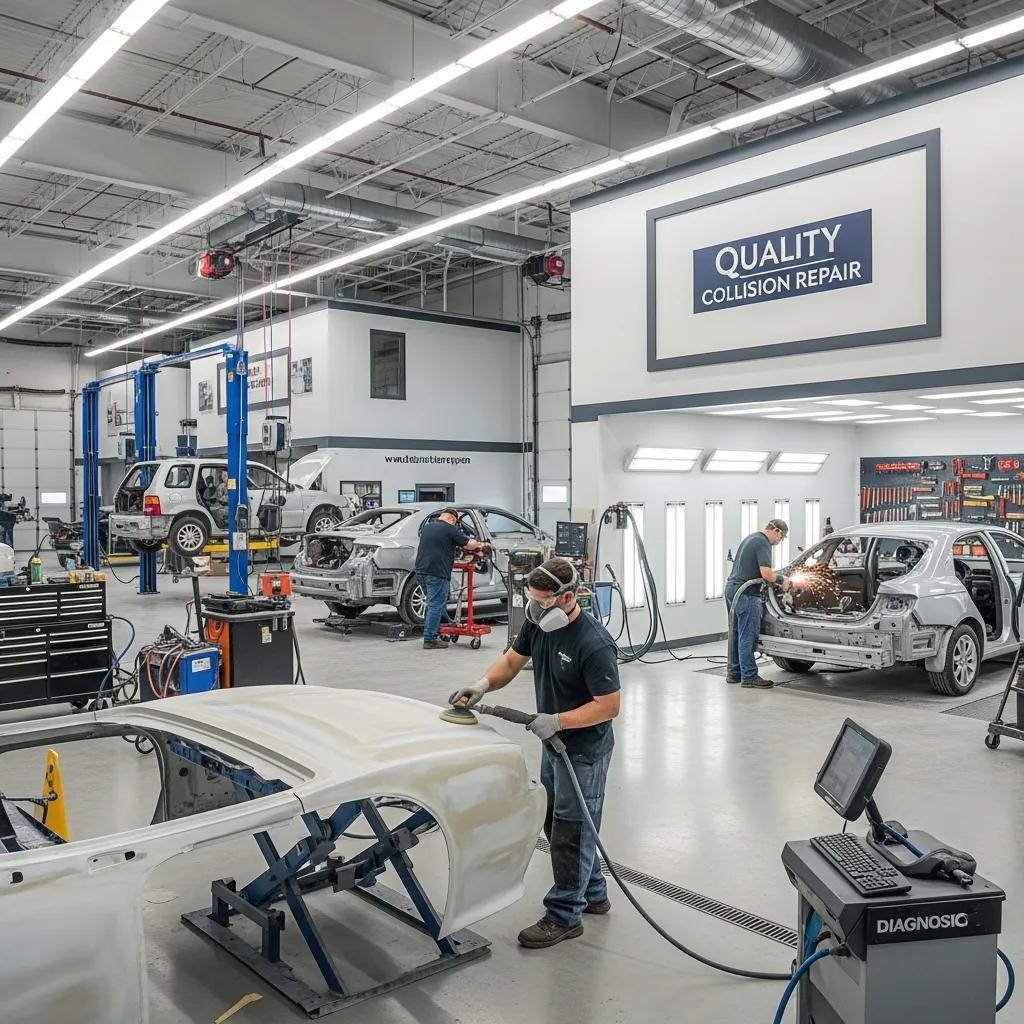
- Facility and equipment quality, including ADAS calibration capability.
- Clear communication, timelines, and post-repair inspection protocol.
These six elements form a practical evaluation framework; use them together when comparing multiple shops to avoid making a decision based on price alone.
How Do Online Reviews and Ratings Reflect Auto Body Shop Reputation?
Online reviews provide signals about consistency, responsiveness, and repair outcomes, but they must be interpreted with context and cross-checked for authenticity. Look for patterns: multiple recent reviews mentioning the same pros or cons (timely pickup, hidden damage, late delivery) are more meaningful than a single five-star entry. Verify reviews across Google, Yelp, and industry forums, weighing photo evidence and whether the shop publicly responds to complaints; a proactive response indicates accountability and customer-service processes. Ask for local references or examples of similar repairs to your vehicle during your shop visit, and use review summaries to form targeted questions—this helps move from reputation signals to direct verification.
Reviews alone are insufficient; combine them with direct verification such as certification displays, written warranties, and a detailed estimate. Checking these tangible indicators reduces reliance on unverified online sentiment and leads into the next critical area: recognizing red flags during evaluation.
What Red Flags Should You Watch for When Evaluating Collision Centers?
Certain warning signs consistently predict poor repair outcomes and deserve immediate follow-up or disqualification of a shop. Red flags include absence of visible certifications, refusal to provide a detailed written estimate, lack of clear warranty language, evasive answers about parts sourcing, and pressure to accept salvaged parts without disclosure. Another serious warning is when a shop insists you must use an insurer-recommended center without explaining your right to choose; this often signals a Direct Repair Program (DRP) relationship that may prioritize speed over transparency.
When you encounter red flags, ask direct questions: request certification proof, demand a written parts policy and warranty, and seek an independent estimate if necessary. If the shop cannot provide clear documentation or refuses to allow a post-repair inspection, consider that a reason to keep searching for a better-qualified provider.
Why Are Certifications and Technician Expertise Crucial for Collision Repair Quality?
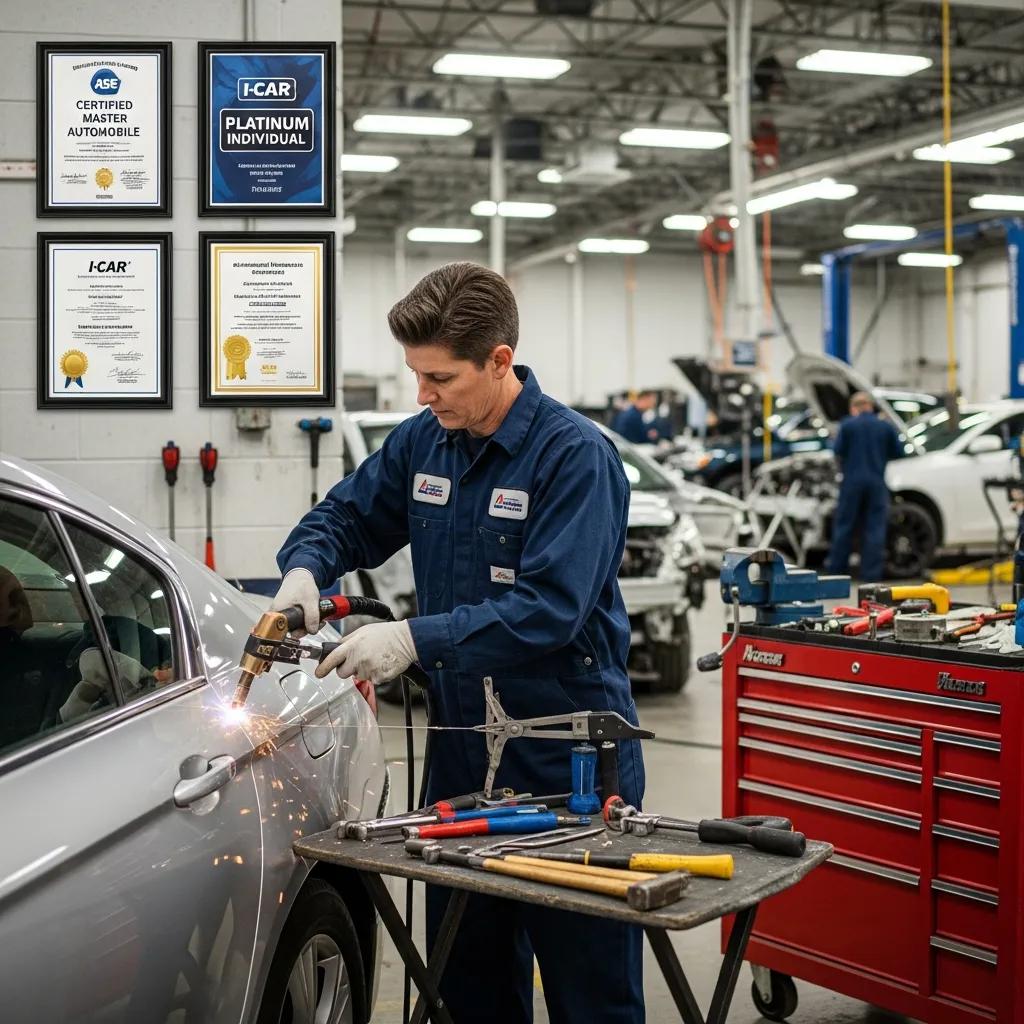
Certifications and technician expertise indicate that a collision shop follows industry standards, invests in ongoing training, and understands modern repair processes—critical elements for ensuring safety and fit/finish. Certified shops adhere to documented procedures that reduce the risk of improper structural repairs, incorrect material handling, and missed diagnostic steps for safety systems. Knowing what specific credentials mean helps you translate certification claims into expected consumer outcomes like stricter quality control and verified ADAS calibration. The next subsections define common credentials and explain how training and equipment influence repair results.
Before the table below, note this article is a web-focused consumer resource designed to help local shoppers interpret certification claims when comparing shops.
| Certification | What It Indicates | Practical Impact for the Consumer |
|---|---|---|
| I-CAR Gold Class | Shop-level program emphasizing continuous training for technicians and staff | Higher probability that technicians follow current repair procedures and receive manufacturer-recommended training |
| ASE Certified Technician | Individual technician certification in automotive service and collision repair competencies | Demonstrates technician-level competence and commitment to standardized diagnostic and repair practices |
| OEM Accreditation | Manufacturer-specific training and approval to perform repairs per factory standards | Ensures adherence to OEM repair protocols, proper parts sourcing, and eligibility for manufacturer warranties |
This table clarifies how credential types map to consumer expectations and repair quality. When a shop shows these certifications, ask which staff have the credentials and request proof of recent training.
What Do I-CAR, ASE, and OEM Certifications Mean for Auto Body Repair?
I-CAR Gold Class reflects shop-level commitment to training across repair roles and often requires documented hours of education, which translates to greater adherence to evolving repair practices. ASE certifications are earned by individual technicians and indicate tested proficiency in relevant competencies; shops employing ASE-certified staff tend to have better diagnostic consistency. OEM accreditation shows a manufacturer has recognized the shop for certain repair standards, which can be particularly important for complex structural or EV repairs where factory procedures matter. Ask shops to show certification documentation and to explain how certification influenced a recent repair; this converts credentials into practical verification.
Understanding certifications leads naturally to assessing the tools and training that enable certified practices, which is critical for ensuring correct outcomes on specialized repairs.
How Does Technician Training and Specialized Equipment Impact Repair Outcomes?
Ongoing training ensures technicians can diagnose hidden damage, follow manufacturer procedures for advanced materials, and perform safety-critical tasks like ADAS recalibration correctly. Specialized equipment—frame racks, aluminum-specific tools, and ADAS calibration rigs—allows shops to execute procedures with the precision required by OEM standards. For example, repairing aluminum structures without correct tooling and training can cause structural weakness; similarly, failing to perform ADAS calibration after sensor replacement can compromise safety systems. Ask shops how they document training, when their staff last completed relevant courses, and whether they use OEM-approved tools for your specific vehicle make to validate capability.
Verifying training and tooling connects directly to parts decisions and warranty assurances, which are covered in the next section.
How Do Parts Quality and Repair Warranties Affect Your Collision Repair Decision?
Parts selection and warranty terms materially influence safety, fit/finish, and long-term value after a repair; choosing the right parts and securing clear warranty coverage protects you from future issues. Parts categories differ in cost, compatibility, and coverage, and warranties vary in duration and transferability—documenting both in writing is essential. The EAV table below summarizes the common part options and their tradeoffs to help you ask targeted questions and make informed choices during estimate review.
| Parts Type | Characteristic | Consumer Impact |
|---|---|---|
| OEM (Original Equipment Manufacturer) | Factory-made to match original specifications | Best fit/finish, typically supported by manufacturer protocols and stronger resale confidence |
| Aftermarket | Produced by third-party manufacturers with variable quality | Often lower cost; quality varies—select reputable aftermarket brands and request warranty details |
| Salvaged/Used | Recycled parts from other vehicles | Lowest cost but higher risk of wear or hidden damage; usually limited or no warranty |
This comparison shows why specifying part type and obtaining written warranties matters; prefer OEM for structural or safety-critical components when feasible.
What Are the Differences Between OEM, Aftermarket, and Salvaged Parts?
OEM parts are produced to manufacturer tolerances and often integrate with vehicle safety systems as intended, reducing fitment and calibration risk. Aftermarket parts vary: some match OEM quality at a lower price, while others save money at the expense of fit or finish; always ask the shop to name the aftermarket brand and warranty. Salvaged parts offer cost savings but carry the highest risk of unseen wear or prior damage and frequently lack warranty support.
When considering parts, prioritize safety-critical components for OEM, vet aftermarket suppliers carefully, and require written disclosure if salvaged parts are proposed.
Choosing parts leads into warranty concerns; after understanding parts tradeoffs, you should ensure coverage that protects labor and parts.
What Should You Know About Auto Body Repair Warranties and Guarantees?
A written warranty should specify what is covered (labor, paint, parts), its duration, and whether it transfers to a new owner; these details protect you if defects appear later. Ask for the warranty in writing, confirm who honors the coverage (shop only or manufacturer-backed), and keep all repair documentation for potential future claims. Red flags include vague duration language, exclusion of certain components without clear justification, or refusal to provide written terms. Knowing warranty scope helps you weigh lower upfront costs against potential long-term expenses and informs your negotiation with insurers if they push a cheaper parts policy.
Clear warranty terms and parts choices interact with insurance decisions, which the following section addresses with practical scripts and a decision table.
How Can You Navigate Insurance Claims and Your Rights When Choosing a Body Shop?
You have the right to choose your repair shop in most jurisdictions, but insurers often promote Direct Repair Programs (DRPs) for convenience and cost control; understanding the tradeoffs helps you make an informed decision. Proper navigation involves documenting damage thoroughly, requesting independent estimates if needed, and using clear communication scripts to assert your rights while keeping the claim moving. The table below maps common insurer actions to consumer effects and provides recommended responses and scripts to use during calls or written communications.
| Insurance Action | Consumer Effect | Recommended Response / Script |
|---|---|---|
| Recommends a DRP shop | Perceived convenience; possible limits on parts/policy | “I appreciate the recommendation; I intend to choose the repair shop that will perform OEM repairs and provide a written warranty. Please advise if that affects my claim approvals.” |
| Requests single estimate | Could limit negotiation leverage | “I will obtain at least two comparable estimates and share them to ensure the scope covers hidden damage and ADAS work.” |
| Asks to direct-bill the shop | Simplifies payment flow | “I agree to direct billing provided the shop’s written estimate and warranty align with my insurer’s approval and my right to choose.” |
What Is a Direct Repair Program and Should You Use Insurance-Recommended Shops?
A Direct Repair Program is an insurer arrangement where the company steers customers to network shops for streamlined claims handling; benefits include faster approvals and coordinated billing. Potential downsides include limited parts policies, pressure to accept certain repair methods, or reduced leverage to verify hidden damage thoroughly.
Accept DRP shops when they demonstrate transparent parts policies, provide OEM options, clear warranties, and allow independent inspections; decline or seek alternatives if the shop cannot provide written scope and warranty guarantees. Use this checklist: request written estimate, verify parts type, confirm warranty in writing, and ensure ADAS calibration is included when applicable.
Knowing when to accept a DRP recommendation helps you maintain control while leveraging insurer conveniences; the next subsection provides scripts to use when communicating.
How Do You Communicate Effectively with Your Insurance Company During Repairs?
Effective insurer communication requires clear documentation, concise questions, and written records of approvals. Gather photos, a dated estimate, and any OEM repair procedures that the shop cites; email or use written messages for approvals so you have a paper trail. Use short, assertive scripts: “Please confirm in writing whether OEM parts are covered and whether ADAS calibration will be approved,” and follow up with “If there is a difference between the estimate and final invoice, please explain how the adjustment will be handled.”
Well-documented communication prevents misunderstandings and supports warranty or claim disputes, while also setting expectations for the shop to deliver timely updates described in the following section.
What Role Does Customer Service and Communication Play in Selecting a Collision Center?
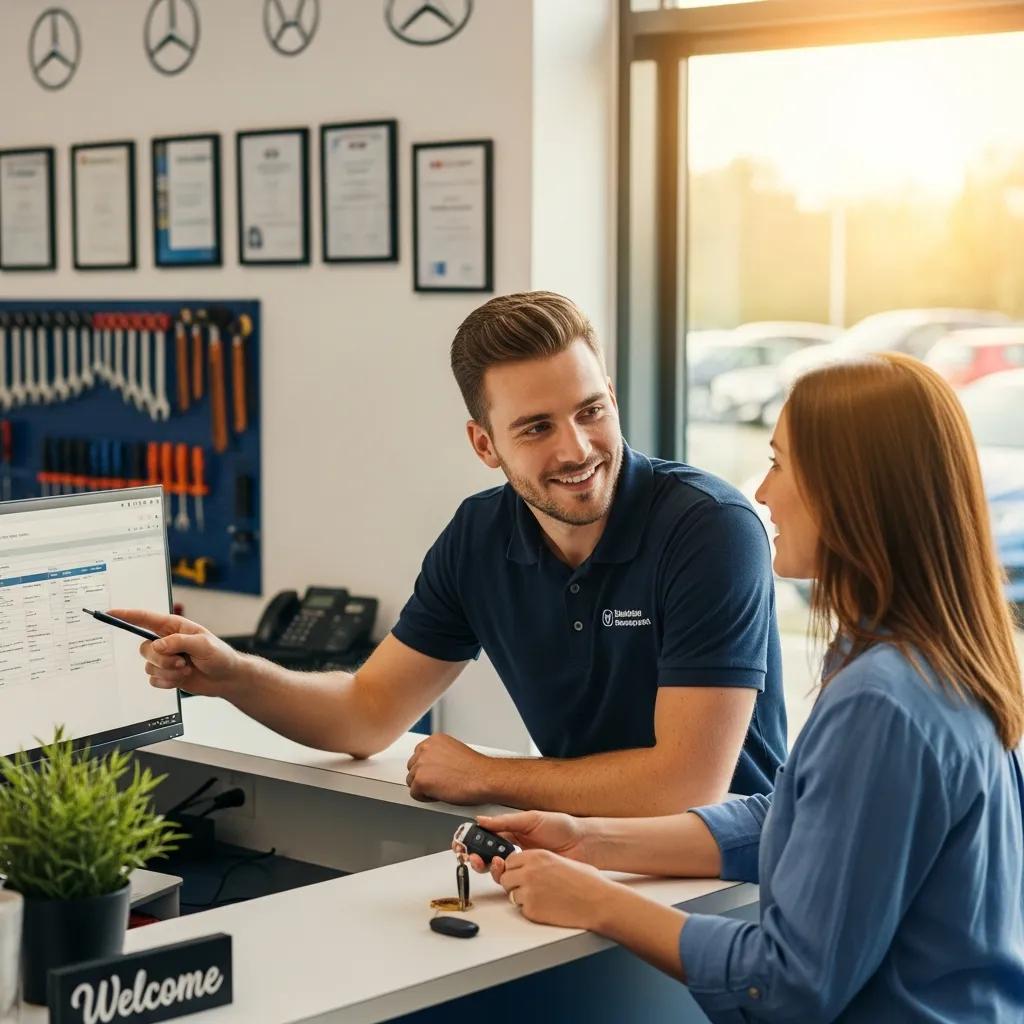
Customer service and communication are more than convenience; they reflect a shop’s processes for documentation, quality control, and accountability—factors that materially influence repair transparency and outcome. A shop that provides realistic timelines, frequent progress updates, and a post-repair inspection procedure is more likely to handle hidden damage and warranty claims properly. Expect written timelines, contact points for updates, and a post-repair checklist; these elements reduce surprises and provide evidence if problems arise. The next subsections outline realistic timeline expectations and why a formal post-repair inspection matters.
A simple checklist helps set expectations and compare shops on service quality.
- Ask for a written start and estimated completion date and reasons for potential delays.
- Request daily or milestone updates by phone or email, including parts arrival notices.
- Require a post-repair inspection walkthrough and printed invoice with itemized work.
- Confirm who to contact for warranty issues and how claims will be handled.
These items create an objective baseline to judge service consistency and lead into realistic timeline planning.
How Important Are Clear Repair Timelines and Progress Updates?
Clear timelines reduce stress and allow you to plan transportation, but more importantly they signal the shop’s project management and inventory control capabilities. Timelines should account for parts lead times, potential hidden damage, and ADAS calibration steps; realistic estimates often include contingency buffers for sudden parts shortages. A typical moderate repair timeline might be one to two weeks for assembly and paint, longer if OEM parts or specialized calibration is needed. Request that any delay be communicated with a reason and new ETA in writing, which preserves accountability and sets the stage for a thorough post-repair inspection.
Reliable communications segue directly into the final expectation: a systematic inspection and follow-up that verifies repair completeness.
Why Should You Expect a Post-Repair Inspection and Satisfaction Follow-Up?
A formal post-repair inspection verifies body alignment, paint match, and the functionality of lights, sensors, and ADAS features before you accept the vehicle; it also documents condition for warranty purposes. During pickup, perform a walk-around with the technician, test drive the vehicle to check alignment and braking, and ask for written confirmation that ADAS systems were calibrated and tested. Shops that schedule follow-ups within a short window demonstrate confidence in their work and a process for addressing post-delivery issues promptly. If problems arise, your documented inspection and communications form the basis for warranty claims and insurer discussions.
Ensuring the shop provides this inspection leads to specialized considerations when your vehicle requires maker-specific or advanced-material repairs, covered next.
How Do You Find a Specialist Auto Body Shop for Your Vehicle Make and Advanced Repairs?
Finding a specialist shop matters when your vehicle uses advanced materials, unique structural designs, or EV-specific systems that require manufacturer procedures and specialized tooling. Specialist shops include OEM dealership body shops and independent facilities that advertise OEM training, documented EV experience, or materials-specific repair capabilities like aluminum or carbon-fiber procedures. Use a targeted verification checklist—ask about past repairs on your make/model, request documentation of OEM training, and confirm access to manufacturer repair bulletins—to validate the shop’s claim of specialization.
Specialist verification requires focused questions and supporting evidence before entrusting complex repairs to any provider.
Why Is Vehicle-Specific Expertise Important for Modern Collision Repair?
Modern vehicles increasingly incorporate high-strength steels, aluminum panels, and composite structures that require manufacturer-prescribed repair sequences and calibrated torque specifications to maintain crashworthiness. Incorrect procedures can lead to compromised structural integrity, corrosion issues, or improper airbag deployment. Vehicle-specific expertise implies familiarity with OEM repair bulletins, access to correct parts, and the ability to follow factory-approved repair flows—factors essential for restoring safety performance. Ask to see examples of similar repairs or documented OEM procedure references to confirm capability.
Verifying vehicle expertise naturally leads to ADAS considerations, since many modern systems require calibration after repairs.
What Is ADAS Calibration and How Does It Affect Collision Repair?
ADAS calibration is the process of aligning or recalibrating sensors and cameras (such as lane-keeping, adaptive cruise, and automatic braking systems) after vehicle bodywork or sensor replacement to ensure systems function safely and as designed. Calibration ranges from static sensor alignment to dynamic drive-based procedures using specialized equipment and OEM procedures; improper calibration can cause false alerts, degraded system performance, or safety failures. Request documentation confirming which ADAS functions were tested and calibrated, ask whether the shop uses OEM procedures or certified calibration tools, and obtain written confirmation that calibration records will be retained for warranty and insurance purposes. Recent guidance and studies through 2025 emphasize calibration as a safety-critical step; confirming it is performed properly is essential before accepting the repaired vehicle.
This final verification step completes the practical checklist for choosing the right collision shop and equips you to move forward with confidence in your repair decisions.