
The hail damage repair cost Houston drivers face typically ranges from a few hundred dollars for minor, localized blemishes to several thousand dollars for severe, vehicle-wide impacts. Total expenses depend heavily on the size, depth, and total number of dents, as well as whether the auto body damage requires paintless dent repair or traditional collision repair.
Understanding the Factors That Impact Hail Damage Repair Costs
Houston weather is famously unpredictable, and a sudden severe thunderstorm can drop hail that leaves your vehicle’s exterior battered. When you bring your vehicle to an auto body shop after a storm, estimators look at several distinct factors to determine the overall scope and cost of the restoration. Because every storm—and every vehicle—is different, each estimate is highly individualized.
The Size and Depth of the Dents
Hailstones can range from the size of a pea to the size of a baseball. Naturally, larger hailstones cause more significant auto body damage. However, the depth of the dent is just as important as its diameter. Shallow dents that have not stretched the vehicle’s metal are generally straightforward to address. Conversely, deep impacts that severely stretch the metal or crack the clear coat require more intensive labor and specialized techniques to resolve.
Total Number of Dents and Affected Panels
Estimators generally evaluate auto body damage on a panel-by-panel basis. A vehicle with a dozen dents concentrated solely on the hood will have a significantly lower repair cost than a vehicle with hundreds of dents spanning the roof, trunk, fenders, and doors. The more panels involved, the more time and labor are required for comprehensive dent removal.
Vehicle Make, Model, and Materials
The type of vehicle you drive also plays a role in the overall expense. Modern vehicles are manufactured with a variety of materials to improve fuel efficiency and safety. For instance, panels made from high-strength steel behave differently under impact than panels made from aluminum. Aluminum is notoriously more difficult to manipulate back into its original shape, which can increase the labor time required for the repair.
Comparing Auto Body Repair Methods
The method used to restore your vehicle is the most significant driver of the final bill. Auto body technicians primarily rely on two main approaches when addressing hail damage, and the choice depends entirely on the severity of the impacts.
Paintless Dent Repair (PDR)
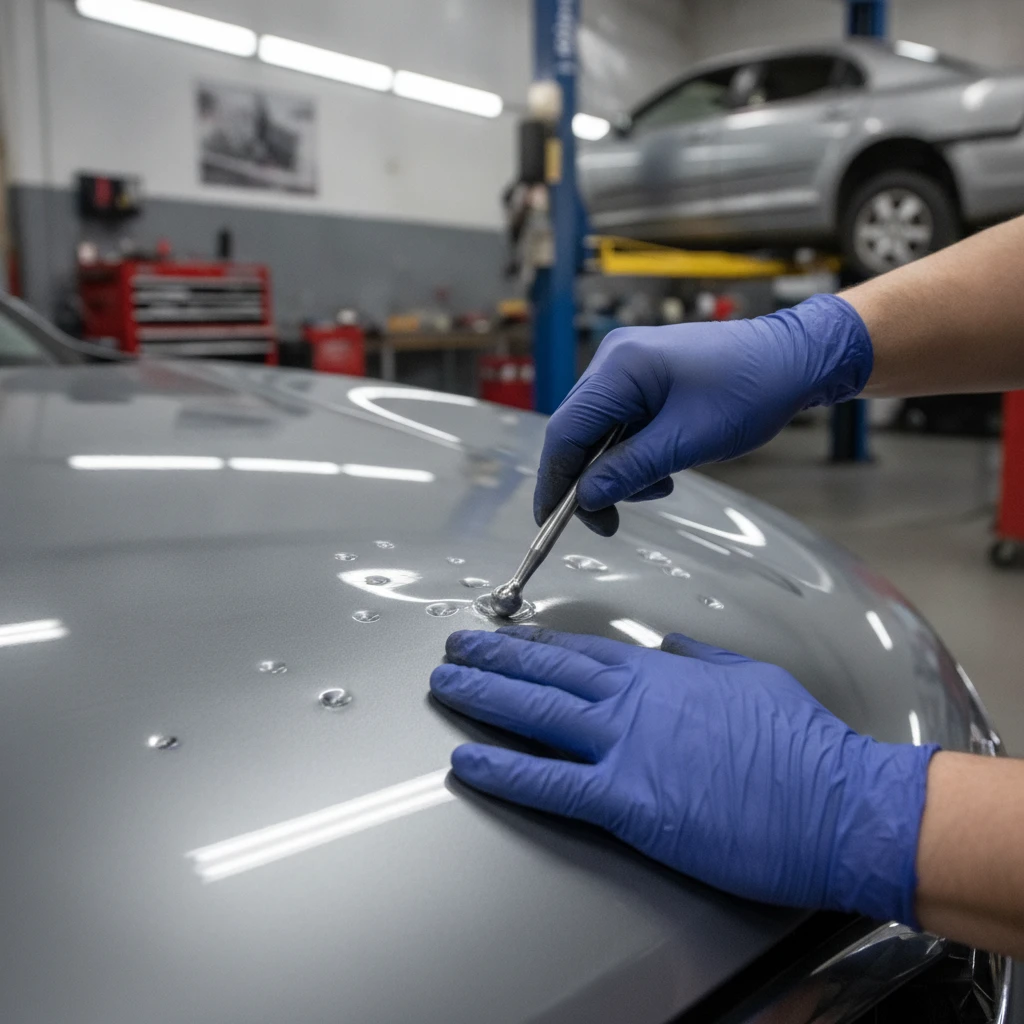
For most mild to moderate hailstorms, PDR is the preferred industry standard. This technique involves accessing the backside of the vehicle’s exterior panels and using specialized tools to gently massage the metal back into its factory shape. Because this method leaves the original paint intact, it bypasses the need for sanding, body fillers, and repainting. As a result, the paintless dent repair process is generally much more cost-effective and faster than conventional methods.
Traditional Collision Repair
When hailstones are large enough to crack the vehicle’s paint, crease the metal, or cause structural damage to the panel, PDR is no longer a viable option. In these severe cases, technicians must use traditional collision repair methods. This process involves pulling the dent, applying high-quality auto body fillers to smooth the surface, sanding the area, and perfectly color-matching new paint to seamlessly blend with the rest of the car. Because of the materials and multi-step labor involved in auto body painting, traditional repairs carry a higher cost.
Estimated Cost Structures for Hail Repair
While an in-person assessment is necessary to determine the exact cost of your specific damage, the following table illustrates how different levels of severity generally influence the required repair methods and relative expenses.
| Damage Severity | Typical Characteristics | Primary Repair Method | Relative Cost Impact |
|---|---|---|---|
| Minor | Small, shallow dents (dime-sized); paint is completely intact; few affected panels. | Paintless Dent Repair (PDR) | Lowest |
| Moderate | Medium dents (quarter-sized); metal may be slightly stretched; spans across the roof, hood, and trunk. | PDR combined with minor conventional bodywork | Medium / Variable |
| Severe | Large, deep dents (golf-ball-sized or larger); cracked or chipped paint; severely creased metal. | Traditional Collision Repair & Panel Replacement | Highest |
Navigating the Auto Insurance Process in Houston
Because hailstorms are considered an “act of nature,” the damage left behind is typically covered under the comprehensive portion of your auto insurance policy. Filing a claim for hail damage generally does not raise your individual insurance premiums in the same way an at-fault collision might.
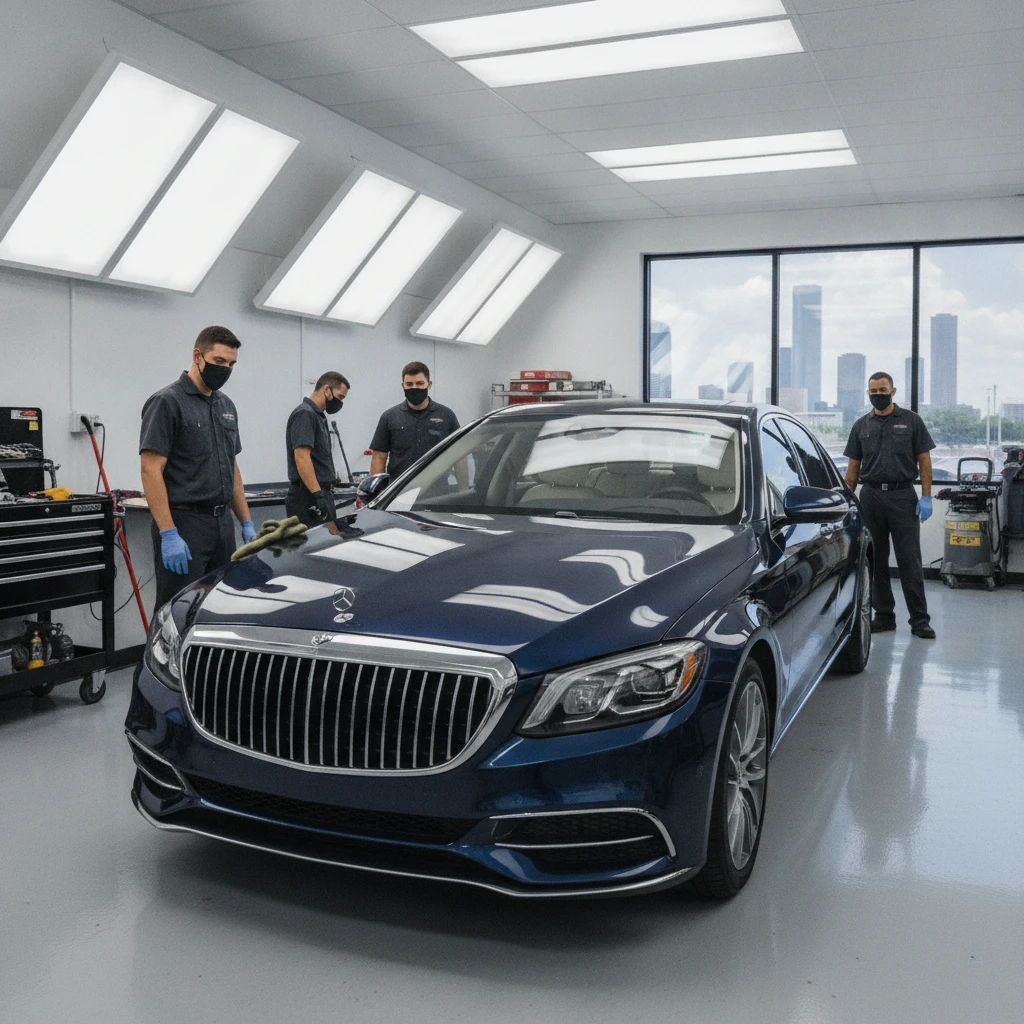
When relying on insurance, your out-of-pocket cost is typically limited to your comprehensive deductible. It is highly recommended that you bring your vehicle to a reputable collision center for an initial evaluation before simply accepting the first estimate provided by the insurance adjuster. Professional auto body technicians utilize specialized lighting to spot microscopic dents that field adjusters often miss. Thorough auto body estimating ensures that all damage is documented so the insurance