The cost of collision and auto body repair in Houston can range from a few hundred dollars for minor cosmetic touch-ups to several thousand dollars for major structural reconstruction. Your final price depends entirely on the extent of the damage, the make and model of your vehicle, current labor rates, and whether you utilize original or aftermarket parts.
Understanding Auto Body Repair Costs in Houston
Houston traffic is notoriously unpredictable. Between congested freeways, sudden severe weather, and everyday parking lot mishaps, the likelihood of needing collision repair is a reality for most local drivers. When an accident happens, the immediate concern—after ensuring everyone is safe—is often the financial impact. Understanding the general breakdown of auto body repair costs can help drivers navigate the stressful aftermath of a collision.
Before looking at estimates, it is important to remember that every accident is unique. A seemingly minor fender bender might conceal underlying structural damage, while an ugly scrape might only require a simple surface fix. Knowing what auto body repair actually includes is the first step toward understanding the final bill.
Key Factors That Influence Your Repair Bill
Several primary variables determine the total cost of bringing a damaged vehicle back to its pre-accident condition:
- Vehicle Make and Model: Luxury vehicles and high-performance cars generally cost more to repair. They often require specialized paints, advanced structural materials like aluminum or carbon fiber, and proprietary components that command a premium price.
- Severity and Location of Damage: Surface damage on a door panel is vastly different from a crumpled front end. Damage that impacts the vehicle’s frame or requires extensive panel realignment will significantly increase labor hours.
- Sensors and Advanced Driver Assistance Systems (ADAS): Modern vehicles are packed with technology. A damaged bumper is no longer just a piece of plastic; it often houses parking sensors, backup cameras, and blind-spot monitors. Recalibrating these systems adds to the overall repair cost.
- Labor Rates: Auto body labor involves highly specialized skills, including structural alignment, metalworking, and precise paint matching. These rates vary by region, and Houston’s market reflects the demand for skilled technicians.
Common Auto Body Repair Scenarios and Industry Estimates
While it is impossible to guarantee a specific price without a physical inspection of the vehicle, understanding generalized industry averages can help set expectations. The table below outlines typical auto body repair categories and the factors that heavily influence their final costs.
| Repair Category | Description of Work | Primary Cost Factors |
|---|---|---|
| Cosmetic Scratch Repair | Sanding, buffing, and repainting clear coat or base paint layers. | Depth of scratch, paint matching complexity, number of affected panels. |
| Dent Removal | Extracting dents from doors, hoods, or quarter panels. | Size and location of the dent, whether paint is cracked or intact. |
| Bumper Replacement | Removing damaged bumper cover, repairing underlying absorbers, and painting new cover. | Presence of ADAS sensors, OEM vs. aftermarket bumper cover costs. |
| Structural/Frame Repair | Mounting the vehicle on an alignment machine to pull the frame back to factory specifications. | Severity of structural shift, vehicle weight class, labor hours required. |
Breaking Down Specific Repair Types
If you are dealing with minor to moderate collision damage, your repair will likely fall into one of the following categories:
1. Front and Rear Bumper Collisions
Bumpers are the most frequently damaged component in rear-end collisions and low-speed parking lot accidents. Traditional bumper repair costs depend heavily on what lies beneath the surface. If the impact was incredibly slow, a simple reshaping and repainting might suffice. However, if the underlying impact bar or safety absorbers are compromised, the entire assembly must be replaced to ensure future crash safety.
2. Door and Quarter Panel Damage
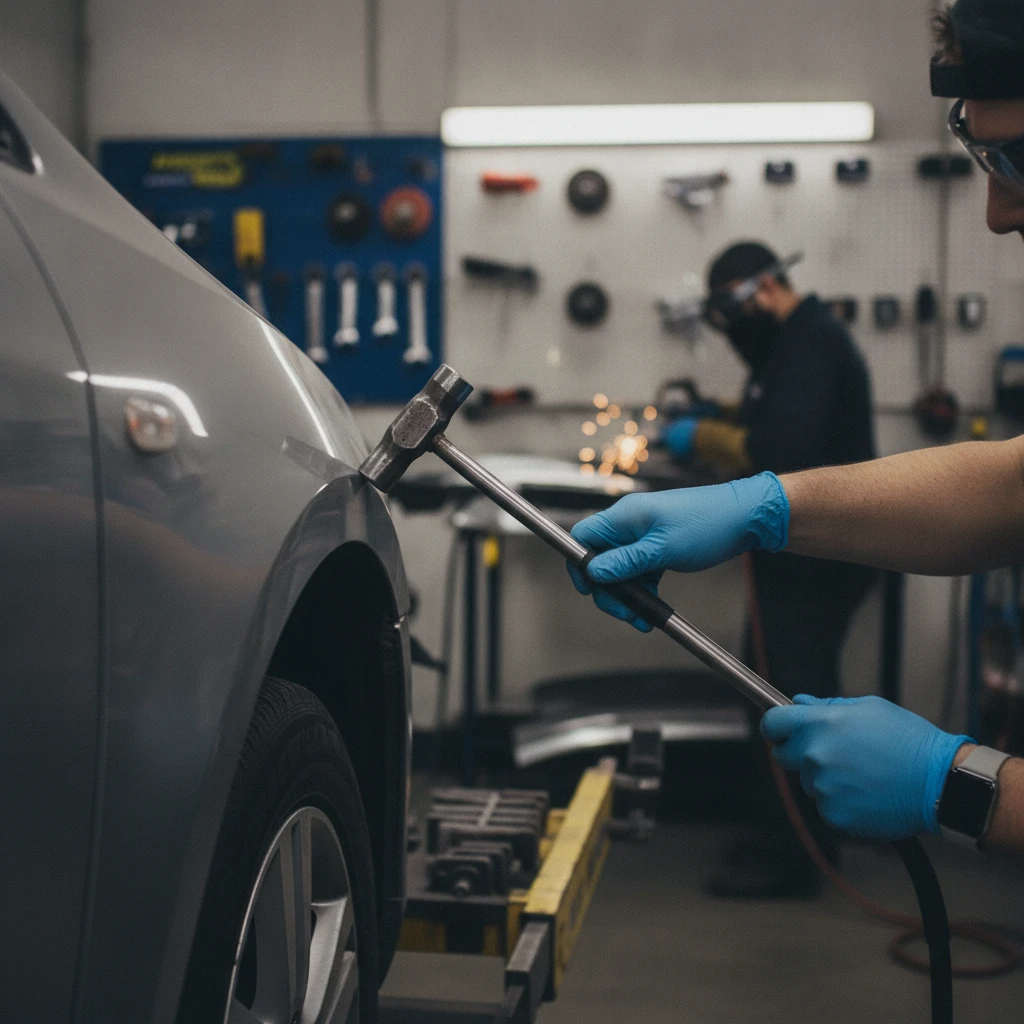
Side-impact collisions or side-swipes often lead to significant door damage. Depending on the severity, technicians will perform specialized dent repair to massage the metal back into place. If the metal is stretched too far or torn, a completely new door skin or full panel replacement is necessary. Blending the paint into the adjacent, undamaged panels to ensure a seamless color match is a standard part of this process, which adds to the labor and material costs.
3. Structural and Frame Alignment
In moderate to severe collisions, the energy of the impact is absorbed by the vehicle’s frame. If the frame is bent, the vehicle is unsafe to drive. Frame machines use hydraulic pressure and computerized measuring systems to pull the chassis back to exact manufacturer specifications. This is the most labor-intensive and critical part of collision repair, heavily influencing the final total.
OEM vs. Aftermarket Parts: Making the Right Choice
One of the most significant line items on any auto body repair estimate is the cost of replacement parts. When an estimate is generated, drivers are generally presented with two main options: OEM and aftermarket parts.
Original Equipment Manufacturer (OEM) parts are built by your vehicle’s original maker. They are designed to fit precisely and maintain the original structural integrity and crash-test ratings established by the National Highway Traffic Safety Administration (NHTSA). Because of their precision and brand name, OEM parts are almost always more expensive.
Aftermarket parts are manufactured by third-party companies. While they are designed to mimic the original parts, variations in fit, finish, and material quality can sometimes occur. The primary benefit of aftermarket parts is cost savings, which is why many auto insurance policies are written to default to these parts during a claim. Choosing between the two often comes down to your budget and the specifics of your insurance coverage.
Navigating Insurance Claims and Deductibles
For major accidents, most drivers rely on their automotive insurance to cover the bulk of the repair bill. If you are at fault, or if your vehicle was damaged by severe weather or a hit-and-run, your collision or comprehensive coverage will apply. In these scenarios, your out-of-pocket expense is limited to your pre-selected deductible (commonly $500 or $1,000).
If another driver is at fault, their liability insurance should cover the entire cost of your auto body repair, meaning you pay nothing out of pocket. However, dealing with insurance adjusters can be complicated. Understanding Texas car insurance claims for auto body repair is crucial. The Texas Department of Insurance stipulates that consumers have the right to choose their own auto body repair facility; you are never legally required to use a shop dictated by an insurance company. Knowing exactly what to do after a car accident in Houston can protect you from being steered toward subpar repairs or feeling pressured into utilizing shops you do not trust.
Understanding Excluded Services (What Auto Body Repair Does NOT Cover)
When budgeting for post-accident recovery, it is vital to understand that collision centers specialize exclusively in exterior panels, frame alignment, and automotive paint. An auto accident can cause a ripple effect of mechanical damage throughout a vehicle. Traditional auto body shops focus strictly on the body shell and underlying frame.
If your vehicle suffered mechanical failure during the crash, those specific issues must be handled by dedicated specialists outside of the auto body repair scope. Services explicitly excluded from standard auto body repair include:
- Glass Replacement: Broken windshields and shattered side windows require dedicated auto glass services.
- Mechanic and Engine Repair: Any internal engine damage, radiator failures, or timing issues fall under general mechanical work.
- Transmission Repair: Shifting issues or driveline damage caused by an impact.
- Routine Maintenance: Oil changes, fluid flushes, and filter replacements.
- Tires and Wheels: Tire replacement, patching, and balancing.
- Brake Services: Brake pad, caliper, and rotor replacement.
You will need to coordinate with separate automotive professionals if your collision resulted in damage to any of these excluded mechanical systems.
Frequently Asked Questions About Houston Collision Repair Costs
How long does an average auto body repair take?
Repair times vary wildly based on the availability of parts and the severity of the damage. A simple bumper scrape might be resolved in a few days, while major structural repairs requiring extensive parts ordering and frame pulling can take several weeks.
Will the new paint match the rest of my car perfectly?
Professional collision centers use advanced color-matching technology to read the exact hue of your vehicle’s current paint, accounting for years of sun exposure and fading. Technicians then blend the new paint into the adjacent, undamaged panels to ensure a visually seamless transition that is undetectable to the naked eye.
Can I just pay out of pocket instead of filing an insurance claim?
Yes. For minor damage where the repair cost is lower than or close to your insurance deductible, many drivers choose to pay out of pocket. This helps avoid potential increases in monthly insurance premiums that can result from filing a claim.
Do I have to get three different estimates for my insurance company?
No. Under Texas state law, you are only required to get one estimate from the auto body shop of your choosing. You do not need to waste time driving around Houston gathering multiple quotes just to satisfy an insurance adjuster’s request.
Get Help With Your Auto Body Repairs Today
Dealing with the aftermath of a car crash is stressful enough without worrying about the complexities of repair costs and insurance adjusters. If your vehicle has suffered exterior body, paint, or frame damage, professional support is just a phone call away. Our team is ready to assess your vehicle, explain the repair process, and help you get back on the road safely. Call us today at (832) 281-4008 to discuss your specific auto body repair needs and schedule your vehicle’s evaluation.