After a car accident in Houston, get to safety first, then check everyone for injuries and call 911 if anyone is hurt or the road is blocked. Move out of traffic if you can, document the scene with photos, exchange insurance and contact information, get a police report, notify your insurer, and choose a trusted body shop for repairs. Here is the full step-by-step checklist.
A collision is stressful, and the moments right after are when good decisions matter most. This guide walks you through exactly what to do, in order, with the Houston-specific details that trip people up. When you are ready for repairs, Auto1StopShop offers free estimates at both of our Houston locations — call (832) 400-5423 any time.
Step 1: Get to Safety First
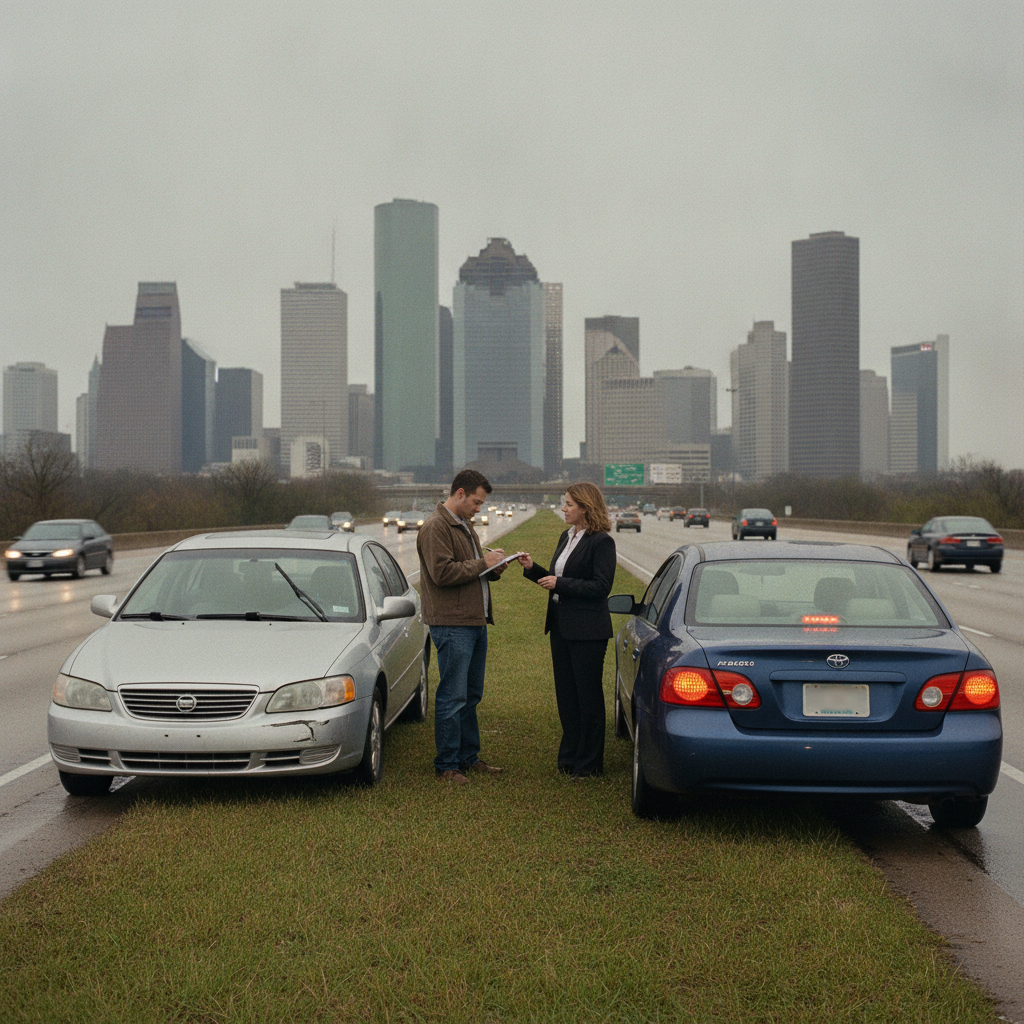
Your safety comes before anything else. If your vehicle is drivable and you are on a busy roadway like I-45, the 610 Loop, or US-59, move it to the shoulder or the nearest safe spot off the travel lanes. Texas law actually requires drivers to move vehicles out of traffic after a minor crash when it is safe to do so — it is sometimes called the “Steer It, Clear It” rule, and it helps prevent secondary collisions on Houston’s fast-moving freeways.
- Turn on your hazard lights immediately.
- If you have flares or reflective triangles, set them out behind your vehicle.
- Do not stand in or near moving traffic. Houston freeway speeds make this genuinely dangerous.
- If the car cannot be moved, stay buckled inside with your seatbelt on until help arrives — it is often safer than standing on the shoulder.
Step 2: Check for Injuries and Call 911
Check yourself and your passengers first, then the other vehicle’s occupants if it is safe to approach. Call 911 if anyone is injured, if a vehicle is blocking traffic, or if the other driver is impaired, hostile, or attempting to leave.
Adrenaline masks pain, so symptoms from whiplash, concussions, or soft-tissue injuries may not show up until hours or days later. When in doubt, get checked out. Do not wave off medical attention just because you feel “fine” at the scene.
Step 3: Call the Police and Get a Report
In Houston, call the police for any crash involving injury, a death, or apparent vehicle damage. Under Texas law, a crash must be reported when it results in injury, death, or property damage that looks to total $1,000 or more — and with today’s repair and parts costs, even a “minor” fender-bender often crosses that line.
- On city streets, Houston Police Department (HPD) typically responds. On the freeways and in unincorporated areas, it may be the Texas Department of Public Safety (DPS) or the county sheriff.
- Ask the responding officer how to obtain a copy of the crash report (the Texas CR-3 form) and write down the report or case number.
- If police do not come to the scene for a minor crash, you may still need to file a driver’s report. Ask the dispatcher what is required.
- Stick to the facts when you speak with the officer. Do not admit fault or guess about what happened — let the investigation establish that.
Step 4: Document the Scene Thoroughly
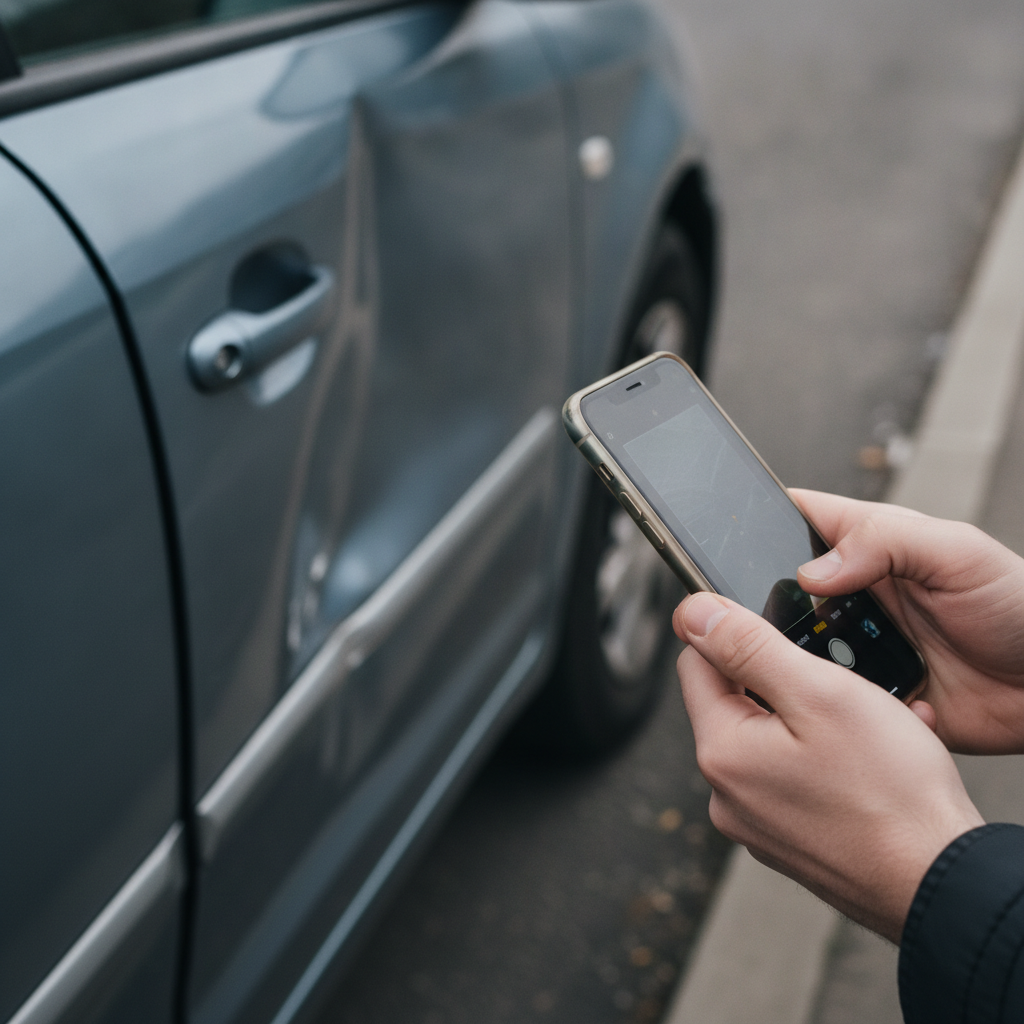
Good documentation protects you during the insurance claim and makes the repair estimate more accurate. Use your phone to capture everything before vehicles are moved (if it is safe), and again afterward. The more you record now, the fewer disputes you will face later.
What to Document Checklist
| What to Capture | Details to Include | Why It Matters |
|---|---|---|
| Photos of all vehicles | Wide shots and close-ups of every dent, scratch, and crumple; all angles | Shows the full extent of damage for the estimate and claim |
| The overall scene | Skid marks, debris, traffic signs/signals, lane positions, intersection | Helps establish how the crash happened and who had right of way |
| Other driver’s information | Name, phone, address, driver’s license number, license plate | Required to file and process your claim |
| Insurance details | Insurance company name and policy number for every vehicle involved | Lets insurers communicate and assign liability |
| Vehicle details | Make, model, year, and color of each vehicle | Confirms identity and matches the report |
| Witnesses | Names and phone numbers of anyone who saw the crash | Independent accounts can resolve fault disputes |
| Police and conditions | Officer name/badge, report number, plus time, weather, and road conditions | Ties your documentation to the official record |
| Tip: Take more photos than you think you need. You can always delete extras, but you cannot recreate the scene once vehicles are towed. | ||
Step 5: Exchange Information — But Not Too Much
Exchange names, phone numbers, insurance companies, policy numbers, and license plate numbers with the other driver. Be polite and cooperative, but keep it brief.
- Do share your name and insurance information.
- Don’t apologize, admit fault, or discuss who caused the crash — even a casual “I’m sorry” can be used against you later.
- Don’t agree to settle the damage privately with cash on the spot. Hidden damage often costs far more than it looks.
Step 6: Notify Your Insurance Company
Report the accident to your insurer as soon as you reasonably can, even if you believe the other driver was at fault. Most policies require prompt notice, and reporting early keeps your claim moving. Give them the facts and your documentation, and ask what your policy covers for repairs, a rental car, and your deductible.
Dealing with adjusters and paperwork is the part most drivers dread. You do not have to handle it alone — our insurance claim assistance team works directly with adjusters to keep your repair on track. For a deeper walkthrough of the claims process, see our collision and auto body repair guide.
Step 7: Choose a Trusted Body Shop — It’s Your Choice
Here is something many Houston drivers do not realize: you have the legal right to choose your own repair shop. Your insurance company can recommend a shop, but they cannot require you to use one. Pick the shop you trust to restore your vehicle properly.
When you compare shops, look for clear written estimates, honest communication, and a team that will work with your insurer. At Auto1StopShop, we handle a full range of collision work, including:
- Bumper repair and replacement for the most common rear-end and parking-lot damage
- Paintless dent repair for dings and dents that have not broken the paint
- Scratch repair and professional repainting with color matching
- Structural and panel repairs after moderate to heavy collision damage
Browse our full list of services or get a free estimate at either Houston location to find out exactly what your repair involves.
How Much Will Repairs Cost?
Repair costs depend heavily on what was hit, how hard, and what your vehicle needs. The ranges below are general Houston estimates to help you set expectations — your actual price varies by damage severity and vehicle, and the only way to know for sure is a hands-on inspection.
| Type of Damage | Typical Range | Notes |
|---|---|---|
| Minor dents and dings | $100 – $500+ | Paintless dent repair is often the most affordable route |
| Bumper repair or replacement | $300 – $1,500+ | Repair vs. replacement depends on cracks and sensors |
| Scratch and paint repair | $150 – $1,000+ | Depth of the scratch and panel size drive the price |
| Moderate to heavy collision | Varies widely | Structural and panel work requires an in-person estimate |
| These are general ranges only, not quotes. Costs vary by damage, parts, and vehicle. Get a free, no-obligation estimate for an accurate figure. | ||
A Quick Recap: Your Post-Accident Checklist
- Get to safety — move out of traffic, turn on hazards.
- Check for injuries and call 911 if anyone is hurt.
- Call the police and get the crash report number.
- Document everything — photos, info, witnesses, conditions.
- Exchange information without admitting fault.
- Notify your insurer promptly.
- Choose your own body shop and get a free estimate.
Frequently Asked Questions
Do I have to call the police after a minor accident in Houston?
You should call the police any time there is an injury, a death, or visible vehicle damage. Texas law requires reporting crashes that cause injury, death, or property damage of about $1,000 or more — and modern repair costs mean even minor-looking crashes often reach that threshold. A police report also protects you during the insurance claim, so when in doubt, call.
Can my insurance company make me use their repair shop?
No. In Texas, you have the right to choose your own auto body shop. Your insurer may suggest a shop in their network, but the final decision is yours. Pick a shop you trust, get a clear written estimate, and lean on our insurance claim assistance to coordinate with your adjuster.
What should I do if the other driver leaves the scene?
If the other driver flees, do not chase them. Instead, note as much as you can — license plate, vehicle make, model, and color, and the direction they went — then call the police right away. Photos and witness statements become especially important in a hit-and-run, so document the scene thoroughly and report the incident to your insurer.
How soon should I get my car inspected after an accident?
As soon as possible. Some damage — bent frames, hidden suspension issues, or cracked components behind a bumper — is not visible from the outside. A prompt inspection catches these problems before they grow and gives you an accurate repair estimate for your claim. Bring your vehicle to either Auto1StopShop location for a free estimate.
Is my car safe to drive after an accident?
Not always. Even if it starts and rolls, leaking fluids, misaligned wheels, broken lights, or structural damage can make a vehicle unsafe. If you have any doubt, have it towed rather than risk driving it. A professional inspection will confirm whether it is roadworthy or needs repairs first.
Damaged in a Houston collision? We’re here to help. Auto1StopShop offers free, no-obligation estimates at both our Southeast Houston shop (8070 Moline St, 77087) and our Midtown Houston shop (1710 W Dallas St, 77019). Call us today at (832) 400-5423 and let our team get you back on the road.