Choosing car painting in Houston requires finding a collision repair facility that utilizes advanced color-matching technology and prioritizes thorough surface preparation. You should look for shops that expertly handle the unique challenges of Texas humidity and intense UV sun exposure. Ensure the chosen facility focuses strictly on auto body and collision restoration rather than offering basic mechanical services.
The Unique Environmental Challenges for Auto Paint in Texas
Houston’s climate is notoriously harsh on vehicle exteriors. Between the blistering summer heat, high humidity, sudden torrential downpours, and the occasional exposure to Gulf Coast salt air, a car’s paint job is constantly under attack. When you are looking for car painting in Houston after an accident or collision, the repair facility must account for these environmental stressors.
Factory paint jobs consist of multiple layers: an electrocoat primer, a base color coat, and a durable clear coat. When a vehicle sustains collision damage, these layers are compromised, exposing the bare metal or plastic substrate to moisture. If the repair process uses inferior materials or rushes the curing phase in high humidity, the new paint will eventually blister, peel, or cloud. A reputable collision center utilizes climate-controlled downdraft spray booths that regulate temperature and airflow, ensuring the paint cures properly regardless of the erratic weather outside. For more insight into how the local climate impacts your vehicle’s exterior, reviewing resources on Houston weather sun fade and scratch repair can help you understand the importance of quality clear coats.
Crucial Factors When Selecting a Shop for Car Painting in Houston
Not all paint jobs are created equal. In the collision repair industry, restoring a vehicle to its pre-accident condition requires highly specialized equipment and strict operational standards. Here is what you should look for when choosing an auto body shop.
Advanced Color Matching Technology
Modern vehicles feature complex paint codes that incorporate metallic flakes, pearl finishes, and intricate tri-coat systems. Simply looking up a factory color code is rarely enough to achieve a flawless match, because a vehicle’s original paint naturally fades over time due to UV exposure. To avoid a mismatched door or fender, top-tier body shops use sophisticated spectrophotometer cameras. These devices scan the adjacent panels of your vehicle to read the exact current shade of the paint, allowing the technicians to micro-tint the new batch of paint for a seamless blend. Understanding how color matching works is critical if you want an invisible post-collision repair.
Meticulous Surface Preparation
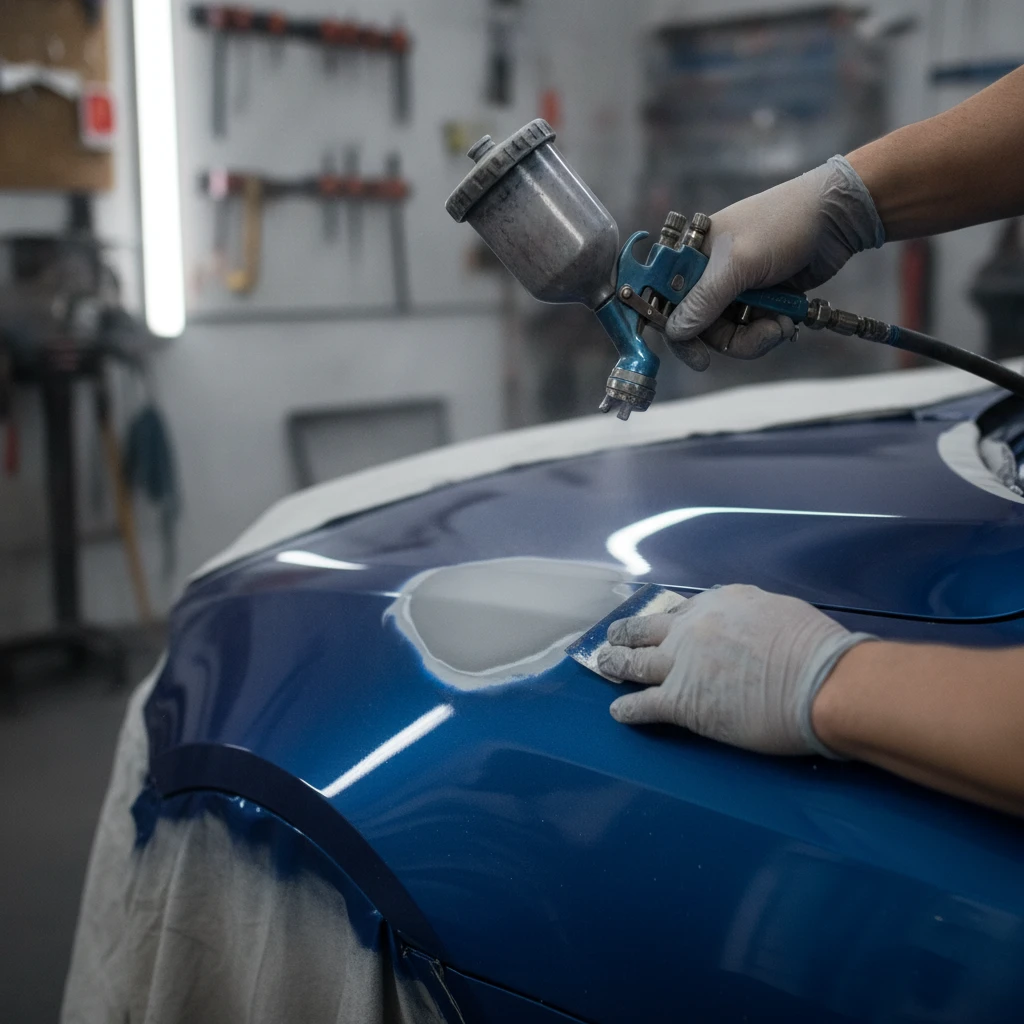
The secret to a flawless auto paint job lies almost entirely in the preparation. Paint is incredibly unforgiving; it will highlight any imperfection, scratch, or speck of dust underneath it. Proper surface preparation involves:
- Thoroughly cleaning and degreasing the panel to remove road grime and wax.
- Stripping away damaged paint and sanding the edges to create a smooth transition to bare metal or plastic.
- Applying high-quality automotive primer to create a bonding surface.
- Block sanding the primer to ensure the panel is perfectly straight and contoured to factory specifications.
- Masking off all adjacent areas to prevent overspray from settling on other parts of the vehicle.
A Strict Focus on Auto Body and Collision Repair
An expert auto body shop specializes specifically in structural and cosmetic restoration. A facility dedicated entirely to collision repair invests its resources into frame measurement systems, spray booths, and specialized welding equipment. Be cautious of “do-it-all” shops. Exceptional car painting requires dedicated painters. It is important to note that a dedicated collision center focuses solely on auto body work; these facilities typically do not offer glass replacement, mechanic services, oil changes, tire mounting, brake pad replacement, engine work, or transmission repairs.
Navigating the Insurance Process for Auto Paint Repair
If your vehicle requires paint due to a fender bender, sideswipe, or rear-end collision, you will likely be navigating an insurance claim. Texas drivers have specific rights when it comes to repairing their vehicles. According to consumer guidelines provided by the Texas Department of Insurance, you have the absolute right to select the repair facility of your choice. An insurance company cannot legally force you to use their specific contracted shop.
Insurance companies often suggest direct repair programs (DRPs), which are shops that have agreements with the insurer. While some DRPs do fine work, independent collision centers work directly for the vehicle owner rather than the insurance company. This dynamic often means an independent shop will meticulously advocate for the proper paint procedures—such as blending adjacent panels to ensure color consistency—even if the insurance adjuster initially tries to limit the scope of the repair. Learning more about DRP shops versus independent collision centers can help you make an informed choice during the claims process.
Dealerships vs. Independent Collision Centers
A common misconception among drivers is that they must return to their vehicle’s dealership to get “factory” paint. In reality, most auto manufacturers do not supply liquid paint to dealerships. Instead, all modern body shops—both dealerships and independent repair centers—source premium paint systems from major automotive refinish brands.
Independent shops that invest in premium paint lines, computerized mixing scales, and specialized training can achieve the exact same, if not superior, results compared to a dealership body shop. Furthermore, independent facilities often offer more personalized customer service and a more direct line of communication with the estimator handling your vehicle. If you are debating where to take your car, comparing independent shops with dealerships reveals that independents are frequently highly competitive in turnaround times and structural repair quality.
Assessing Damage: When Do You Need Paint vs. Alternatives?
Not every dent or ding requires a trip to the spray booth. Depending on the severity of the damage, there are different methods for restoring your vehicle’s exterior. If the clear coat and base coat are intact, alternative methods might be viable. However, if the paint is scratched down to the primer or metal, repainting is mandatory to prevent rust.
| Type of Damage | Is Paint Usually Compromised? | Recommended Repair Method | Process Overview |
|---|---|---|---|
| Minor Hail Damage / Door Dings | No (usually intact) | Paintless Dent Repair (PDR) | Massaging the metal back to its original shape from behind the panel without requiring any sanding or painting. |
| Deep Key Scratches or Gouges | Yes | Panel Refinishing | Sanding down the damaged area, applying primer, painting the specific panel, and applying a new clear coat. |
| Sideswipe Collision Damage | Yes | Auto Body Repair & Blending | Pulling out dents or replacing the panel, painting the new surface, and blending the color into adjacent panels for a seamless look. |
| Bumper Scrapes from Potholes | Yes | Bumper Repair & Refinishing | Repairing the plastic structure, smoothing out the gouges, applying an adhesion promoter, and repainting the bumper cover. |
Frequently Asked Questions (FAQs) About Car Painting Houston
Does my entire car need to be repainted if one door is damaged?
No, a full respray is rarely necessary for isolated collision damage. Professional auto body painters use a technique called “blending.” If a replacement door is painted, the painter will gradually feather the new base coat color into the adjacent fender and quarter panel. Afterward, the entire side of the car (or the affected adjacent panels) receives a fresh clear coat. This tricks the human eye, making the transition between the brand-new paint and the older, factory paint completely invisible.
How long does it take for auto paint to cure?
In a professional collision center equipped with a heated spray booth, the paint is baked at high temperatures to accelerate the cross-linking process of the clear coat. When the car leaves the booth, it is typically dry to the touch and safe to drive. However, the paint will continue to outgas and fully cure over the next 30 to 60 days. During this curing window, you should wash the vehicle by hand and avoid applying any chemical waxes or ceramic coatings, as these can seal in the solvents and cause the paint to haze.
Do you provide mechanical repairs along with the auto painting?
Professional collision centers specialize exclusively in the structural and cosmetic restoration of your vehicle following an accident. We focus entirely on frame repair, auto body straightening, panel replacement, and automotive painting. We do not handle glass replacement, mechanical repairs, oil changes, tire rotations, brake jobs, engine diagnostics, or transmission work. Keeping this strict focus ensures that our technicians remain highly specialized experts in collision restoration.
Will the new paint match if my car has suffered from Houston sun fading?
Yes. This is why standard paint codes are only a starting point. By using advanced spectrophotometer cameras and creating custom spray-out cards (test panels), painters tint the factory formula to match the exact current state of your vehicle’s sun-faded exterior. The combination of custom tinting and adjacent panel blending ensures the final repair matches perfectly, regardless of how much UV exposure your vehicle has endured.
Get Your Vehicle Looking Like New Again
Choosing the right facility for car painting in Houston is the most important step in ensuring your vehicle retains its value and structural integrity after an accident. From meticulous surface preparation and computerized color matching to navigating the complexities of your auto insurance claim, you need a dedicated auto body shop you can trust. If your vehicle has suffered collision damage and requires professional panel replacement, body filler work, and undetectable paint blending, reach out to an experienced local team. Contact us today at (832) 400-5423 to schedule your estimate and get your vehicle expertly restored.