In Texas, you have the legal right to choose any auto body shop you want for an insurance claim repair. Your insurer can recommend a shop, but it cannot force you to use one. You also have rights around your deductible, the parts used on your car, and what happens if your vehicle is declared a total loss. Knowing these rights protects you and your car.
A car accident is stressful enough without an insurance company steering your repair decisions. The good news for Houston drivers is that Texas law gives you real protection. This guide walks through your rights on a Texas auto insurance claim repair, from picking your shop to handling adjusters, deductibles, supplements, and total-loss situations, so you can make confident choices and get your vehicle fixed the right way.

Your Right to Choose Your Own Repair Shop in Texas
This is the single most important right to understand. Under Texas law, the choice of repair facility belongs to you, the vehicle owner, not your insurance company. An adjuster may suggest a shop on their network, and that is allowed. What is not allowed is telling you that you must use a specific shop, or refusing to pay a fair claim simply because you chose an independent body shop instead.
You may hear phrases like “we can’t guarantee the work unless you go to one of our shops” or “that shop isn’t approved.” This is a steering tactic. While insurers can decline to extend their own repair guarantee to a shop they don’t have a contract with, that does not strip you of your right to choose. A reputable independent shop stands behind its own work.
- You pick the shop. The body shop works for you, not the insurer.
- You are not required to get multiple estimates just because an insurer asks for them, though it can be helpful.
- You can switch shops at almost any point if you are unhappy, even after a claim has started.
- The insurer pays for the repair, but the quality and method of repair are between you and your chosen shop.
At Auto1StopShop, we handle this conversation for our Houston customers every day. If you want help understanding your options, our team explains how insurance claim assistance works before you commit to anything. You can also start with a no-pressure look at our full collision and auto body repair services.
The Texas Auto Insurance Claim Process, Step by Step
Every claim is a little different, but the path from accident to a repaired vehicle usually follows the same milestones. Here is what to expect and what to do at each stage so nothing slips through the cracks.
| Step | What Happens | What You Should Do |
|---|---|---|
| 1. Document the scene | Damage occurs from a collision, hail, a parking-lot hit, or other event. | Photograph all damage, get the other driver’s info, and file a police report if needed. |
| 2. File the claim | You notify your insurer (or the at-fault driver’s insurer) and receive a claim number. | Write down the claim number, adjuster name, and phone number. Report facts only. |
| 3. Choose your shop | The insurer may suggest a network shop; the decision is yours. | Pick a shop you trust and tell the adjuster where the vehicle will be repaired. |
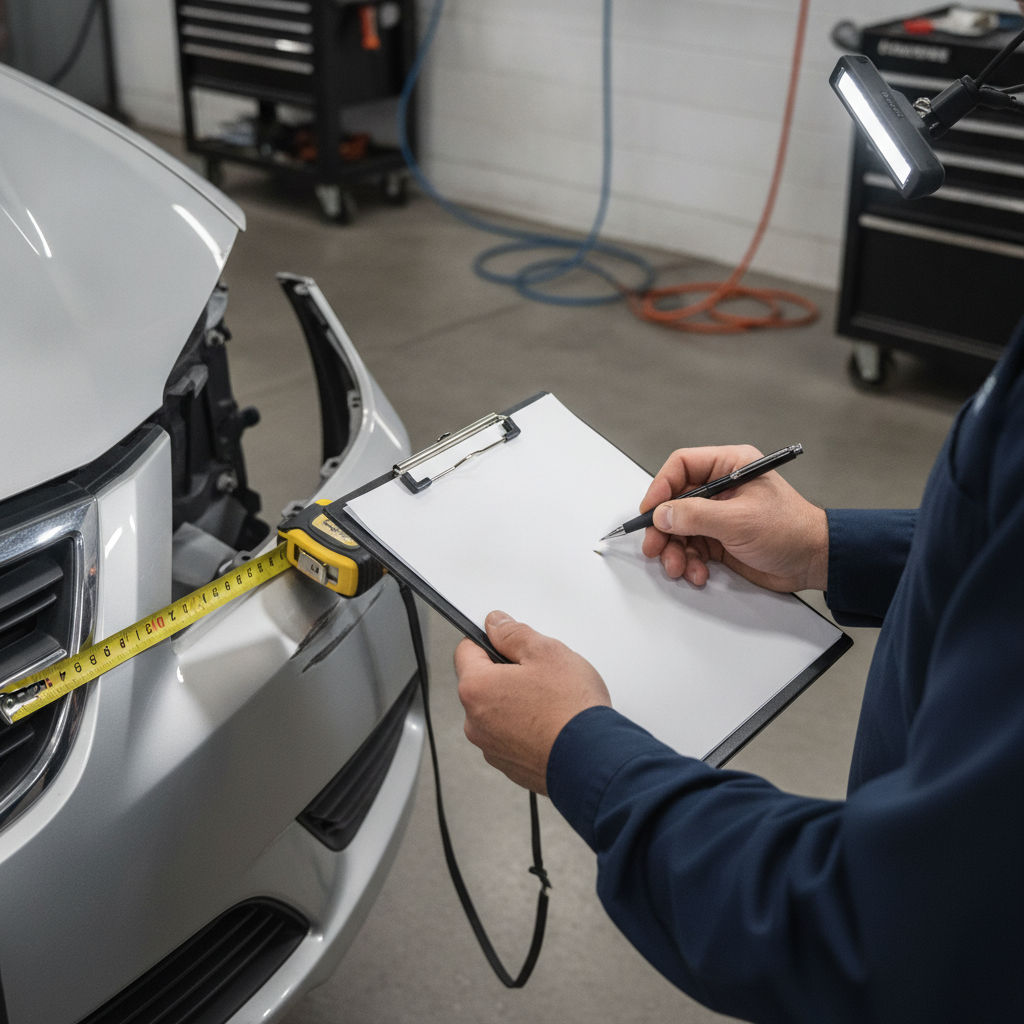
| 4. Get the estimate | An adjuster or your shop writes an initial damage estimate. | Have your shop write a thorough estimate. Compare it against the insurer’s number. |
| 5. Approve the repair | The insurer authorizes payment minus your deductible. | Review the line items and ask about parts type (OEM vs. aftermarket) before work begins. |
| 6. Repair and supplements | Hidden damage is often found during teardown and added as a supplement. | Let your shop document and submit supplements directly to the insurer. |
| 7. Pick up and pay | Repairs are completed and inspected. | Inspect the work, pay your deductible, and keep all paperwork. |
Note: Timelines and exact steps vary by insurer, by who is at fault, and by the severity of damage. This table is a general roadmap, not a guarantee of how any single claim will unfold.
Direct Repair Programs (DRP) vs. Independent Shops
A Direct Repair Program, or DRP, is a contract between an insurance company and a body shop. The shop agrees to certain pricing, processes, and turnaround standards in exchange for a steady flow of referred work. Insurers often steer you toward these shops because the arrangement is convenient for them. That convenience can come with trade-offs for you.
An independent shop like Auto1StopShop is not bound by an insurer’s internal pricing agreements. That means we answer to the customer first and write the repair the vehicle actually needs, not the repair that fits a network discount. Both models have legitimate pros and cons. Here is an honest comparison.
| Factor | DRP (Insurer Network Shop) | Independent Shop |
|---|---|---|
| Who the shop answers to | Has a contract with the insurer; balances insurer and customer interests | Answers primarily to you, the vehicle owner |
| Convenience | Often faster claim approvals and pre-arranged paperwork | You or the shop coordinates with the adjuster directly |
| Parts decisions | May favor aftermarket or used parts to control insurer cost | Can advocate for OEM parts when appropriate |
| Repair scope | May be encouraged to repair rather than replace to save cost | Writes the repair based on the damage, then negotiates |
| Guarantee | Insurer may back the work as long as you stay in network | Shop stands behind its own workmanship |
| Your choice | One of several options the insurer offers | Your right under Texas law, regardless of network status |
The takeaway is simple. A DRP shop is not automatically bad, and an independent shop is not automatically better, but you should never feel pressured into either. Choose the shop whose first loyalty is to fixing your car correctly. If that is us, we are glad to help with everything from bumper repair to full structural collision work.
Understanding Your Deductible
Your deductible is the amount you agreed to pay out of pocket before your insurance coverage kicks in. If your repair is estimated at a certain amount and your deductible is, say, several hundred dollars, the insurer pays the balance and you pay the deductible directly to the shop.
A few important points Houston drivers often ask about:
- You usually pay the deductible to the shop, not the insurer, when you pick up the car.
- If the other driver is clearly at fault and you file through their insurer (a third-party claim), you typically do not pay a deductible at all.
- Be cautious of “we’ll waive your deductible” offers. A shop quietly inflating the estimate to cover your deductible can be considered insurance fraud, and it puts you at risk. A trustworthy shop will not play that game.
- Deductibles apply per claim, not per repair line item, so one accident means one deductible even if several panels are damaged.
If you are unsure how your deductible affects a specific repair, bring your vehicle in for a free estimate and we will walk you through the numbers in plain language.
Supplements: Hidden Damage and Why Estimates Change
An initial estimate is almost never the final number on a collision repair, and that is normal. When a technician removes a damaged bumper or fender, they frequently uncover damage that was invisible from the outside, such as a bent reinforcement bar, a cracked bracket, or hidden corrosion. The request to the insurer to cover this newly found damage is called a supplement.
Supplements are a routine and legitimate part of the process. Here is how to handle them well:
- Let your shop document everything with photos. Clear documentation is what gets a supplement approved.
- Don’t panic when the estimate grows. A higher final number usually means the shop found real damage that needs to be fixed for your safety.
- Keep your shop and adjuster talking directly. The fewer middlemen, the faster supplements get approved.
- Never approve repairs that skip the supplement just to keep the original price. Unrepaired structural damage is a safety risk.
Because hidden damage is so common, repair costs are always a range that varies by the vehicle and the severity of the damage. Anyone who quotes you an exact final price before teardown is guessing. Our estimators are upfront about what we can see now and what might surface later.
Your Rights on OEM Parts vs. Aftermarket Parts
Parts are one of the most contested areas in any auto body claim, so it pays to understand the terms:
- OEM parts (Original Equipment Manufacturer) are made by or for your vehicle’s brand and match factory specifications.
- Aftermarket parts are made by third-party companies. Quality varies, and fit is not always identical.
- Used or recycled parts come from salvaged vehicles and are sometimes used for older cars.
In Texas, insurers are generally allowed to specify aftermarket or non-OEM parts in an estimate, but you have rights too. Your insurer must disclose when non-OEM parts are being used. On newer vehicles still under a manufacturer warranty, or on cars with advanced safety systems and sensors, OEM parts are often the right call to preserve fit, finish, and crash performance. You can request OEM parts, and in some cases you can pay the difference if the insurer will only cover the aftermarket price.
This matters most on parts tied to safety and appearance, where panel gaps and paint matching are visible. When we handle your car painting and refinishing, proper part selection is what makes the final color and fit look factory-correct. For minor dings that don’t require a new panel at all, paintless dent repair can often restore the original metal and avoid the parts debate entirely.
Total Loss vs. Repair: When the Insurer “Totals” Your Car
An insurer declares a vehicle a total loss when the cost to repair it approaches or exceeds a certain percentage of the car’s actual cash value. In Texas, the threshold is set by a statutory formula, and once a vehicle meets it, the insurer typically pays you the value of the car rather than paying to repair it.
If your car is heading toward total-loss territory, keep these rights and tips in mind:
- You can dispute the valuation. Insurers use market data to set actual cash value, and that number is negotiable. Provide comparable local listings and records of recent maintenance or upgrades.
- Watch the repair-versus-value math. A thorough repair estimate that captures all the damage can sometimes push a borderline car into total-loss, which may actually benefit you if the payout exceeds the car’s worth to you.
- You may have the option to keep the vehicle. In some cases you can retain a totaled car (it gets a salvage title) and the insurer deducts the salvage value from your payout.
- Sentimental or specialty vehicles are different. For a beloved older car, repairing past the total-loss point may still make sense to you. Our classic car restoration team understands when a vehicle is worth saving regardless of the formula.
Dealing with Adjusters: Practical Tips
The insurance adjuster is the person who evaluates your damage and authorizes payment. Most adjusters are professional, but remember their job includes controlling the insurer’s costs. Protect yourself with these habits:
- Stick to the facts. Describe what happened without speculating about fault or exaggerating.
- Keep everything in writing. Follow up phone calls with a short email summary so there is a record.
- Don’t accept the first estimate as final. Let your shop write an independent estimate and reconcile any differences.
- Let your shop talk to the adjuster. A good body shop negotiates supplements and parts on your behalf, which saves you time and stress.
- Never sign a final release until repairs are complete and you have inspected the work.
You do not have to navigate adjuster conversations alone. Our team in Houston regularly coordinates directly with insurers so you can focus on getting back on the road. Whether it is a fresh dent from a parking-lot mishap or a deep gouge along a door, we handle the paperwork alongside the actual dent repair and scratch repair work.
Why Houston Drivers Choose Auto1StopShop
Houston roads see their share of fender-benders, hail seasons, and freeway collisions, and our two locations make it easy to get help no matter where you are in the city. We work from our Southeast Houston shop at 8070 Moline St, 77087, and our Midtown Houston shop at 1710 W Dallas St, 77019. Both teams put your interests first, write honest estimates, and stand behind the work we do.
We will never pressure you into a network you don’t want, and we will always explain your options in plain English. Explore our full range of auto body services or learn more about visiting either Houston location whenever you are ready.
Frequently Asked Questions
Can my insurance company make me use a specific repair shop in Texas?
No. Under Texas law, you have the right to choose your own auto body shop for an insurance claim repair. Your insurer can recommend a shop in its network, but it cannot require you to use one or deny a fair claim solely because you picked an independent shop. The choice of repair facility always belongs to you, the vehicle owner.
Who pays my deductible on a Texas auto insurance claim?
You pay your deductible directly to the repair shop, usually when you pick up your vehicle. The insurer covers the rest of the approved repair cost. If another driver is clearly at fault and you file through their insurance as a third-party claim, you typically do not pay a deductible at all. Be wary of any shop offering to “waive” your deductible, as that can involve fraud.
What is a supplement and why did my repair estimate go up?
A supplement is a request to the insurer to cover damage discovered after the initial estimate, usually found once a technician removes outer panels and sees hidden damage underneath. Estimates commonly rise during repair because collision damage is often deeper than it looks. A reputable shop documents the new damage with photos and submits the supplement to your insurer for approval.
Can I demand OEM parts for my car in Texas?
You can request OEM (Original Equipment Manufacturer) parts, and insurers must disclose when non-OEM parts are being used. While insurers may specify aftermarket parts to control cost, OEM parts are often the better choice on newer vehicles, cars under warranty, or models with safety sensors. In some cases you can pay the difference to upgrade to OEM if the insurer only covers the aftermarket price.
What does it mean when an insurer “totals” my car?
A total loss means the cost to repair your vehicle approaches or exceeds a set percentage of its actual cash value, based on a Texas statutory formula. The insurer then pays you the car’s value instead of funding repairs. You can dispute the valuation with comparable local listings, and in some cases you may keep the vehicle with a salvage title while the insurer deducts the salvage value from your payout.
Have a claim and want a straight answer? Get a free estimate at either Houston location and let us coordinate with your insurer for you. Call Auto1StopShop today at (832) 400-5423.