
In 2024, repairing a truck generally requires a larger financial investment than a sedan after a collision due to differences in structural design, material usage, and part scale. While sedans typically utilize unibody construction designed to crumple and absorb impact, trucks rely on rigid body-on-frame architectures. When choosing an auto body shop Houston TX residents must understand how vehicle classification impacts repair times, labor complexity, and the overall trajectory of an insurance claim.
The Core Differences: Trucks vs. Sedans in Collision Repair
Structural Design: Body-on-Frame vs. Unibody
The fundamental difference in repair costs between a truck and a sedan begins with how the vehicle is built. Sedans, crossovers, and smaller passenger vehicles are almost exclusively manufactured using unibody construction. In a unibody vehicle, the chassis and the body are a single, continuous piece of metal. This design is highly effective at keeping occupants safe because it is engineered with specific crumple zones. When a sedan is involved in a collision, the impact energy is intentionally dispersed throughout the vehicle’s framework. Consequently, what looks like a minor fender bender might require putting the vehicle on a frame machine and using computerized measuring systems to pull the unibody back to factory specifications.
Conversely, pickup trucks typically utilize a body-on-frame design, where the passenger cab and rear bed are separately mounted onto a heavy steel ladder frame. This makes trucks exceptionally durable for towing and hauling, but it completely changes the dynamics of a crash. Because the heavy frame is extremely rigid, impact forces are often transferred differently. While low-speed impacts might only damage a bumper or a fender without shifting the underlying heavy frame, high-speed collisions can severely bend the steel frame rails. Repairing or replacing a solid truck frame is a massive mechanical undertaking that significantly elevates collision repair costs. To better understand how vehicle mass and structural integrity affect crash dynamics and occupant safety, drivers can review testing data published by the National Highway Traffic Safety Administration (NHTSA).
Material Costs and Fabrication Trends
The Rise of Military-Grade Aluminum
Historically, both trucks and sedans were manufactured primarily using mild steel. As we move deeper into 2024, material science has evolved drastically, heavily influencing the estimates written at a professional auto body shop Houston TX. Modern sedans increasingly incorporate high-strength steel, ultra-high-strength steel, and various lightweight composites to improve fuel economy while maintaining structural safety ratings.
However, the pickup truck market has seen a massive shift toward military-grade aluminum alloys. This is most notable in top-selling models like the Ford F-150, but aluminum is increasingly found in the tailgates, hoods, and doors of modern vehicles from Chevrolet, GMC, and Ram. Aluminum is significantly lighter than steel, allowing for higher payload capacities, but it behaves very differently when struck. Aluminum does not possess the structural “memory” that steel does, meaning it is much harder to pull a dent out of an aluminum panel. In many cases, damaged aluminum truck panels must be entirely replaced rather than hammered and repaired. This increases both raw part costs and specialized labor requirements. When reviewing your repair options, understanding the nuances of choosing between OEM and aftermarket parts is crucial, especially since aftermarket aluminum panels may not meet the exacting structural specifications or corrosion resistance of the original manufacturer components.
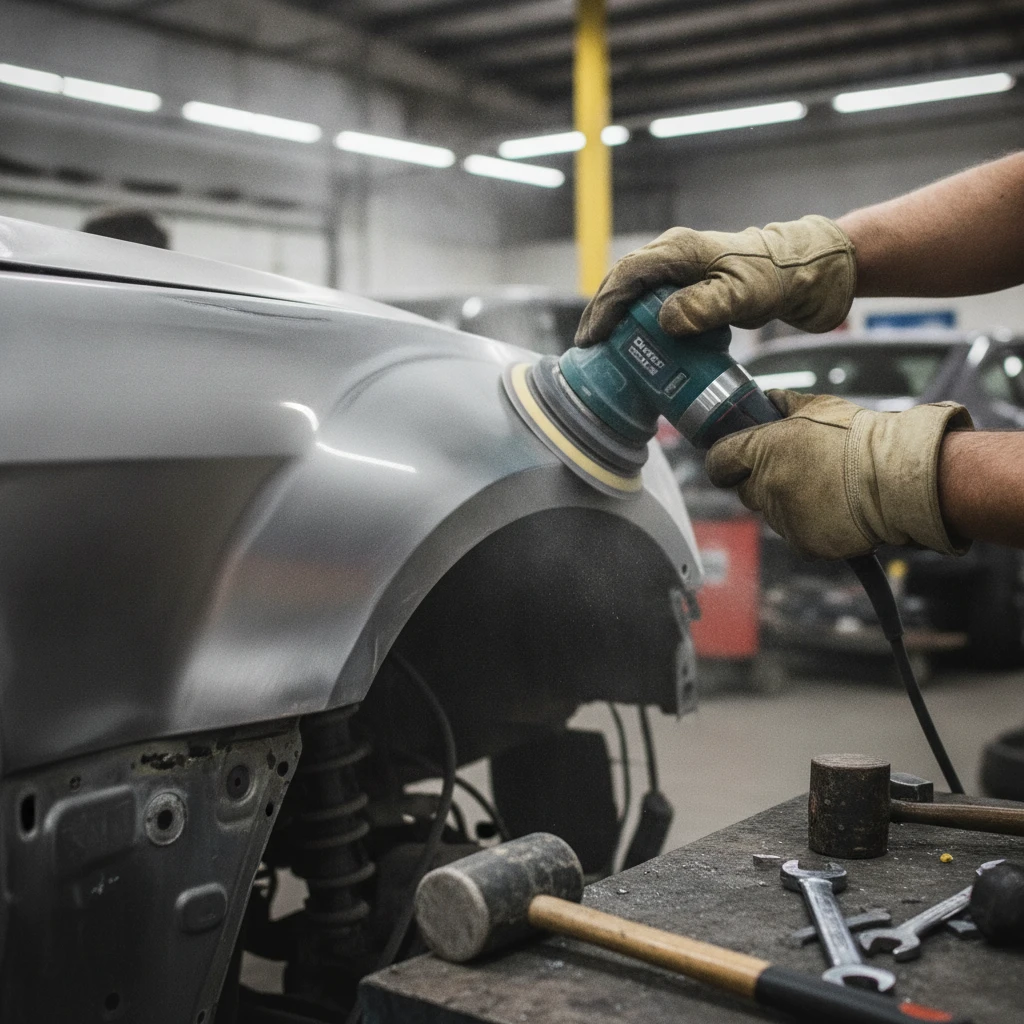
Comparative Data Breakdown: Repair Factors
To better illustrate the differences in post-accident restoration, the following table breaks down common repair factors for standard passenger sedans compared to full-size pickup trucks.
| Repair Factor | Sedan Characteristics | Pickup Truck Characteristics |
|---|---|---|
| Structural Architecture | Unibody (integrated frame and body shell) | Body-on-frame (separate cab/bed bolted to chassis) |
| Common Body Materials | High-strength steel, flexible plastics, composites | Heavy gauge steel, extensive aluminum alloy panels |
| Labor Complexity | Requires precision 3D unibody pulling and measuring | Requires specialized aluminum welding, heavy frame pulling |
| Part Scale and Weight | Smaller, more aerodynamic and lightweight panels | Massive beds, heavy tailgates, oversized hoods |
| Paint Surface Area | Standard surface area for prep and blending | Significantly larger surface area for clear coat and blending |
This side-by-side comparison highlights exactly why repair estimates for trucks generally trend higher than sedans. The sheer physical size of truck components, combined with the specialized tools, clean rooms, and training required to safely manipulate aluminum and heavy steel, naturally results in a higher concentration of specialized labor hours.
Navigating the Insurance Estimate Process
When you initially take your damaged sedan or truck to a local collision center, the first estimate provided by the insurance adjuster is rarely the final cost of the repair. Insurance adjusters typically write strictly visual estimates—meaning they are only legally allowed to account for the damage they can clearly see on the exterior surface.
Because modern vehicles are densely packed with hidden crash sensors, camera brackets, and high-strength impact bars beneath the plastic bumper covers, concealed damage is virtually guaranteed in a moderate-to-severe crash. This is especially true for modern trucks, where massive grilles and tall front bumpers obscure vital cooling components, turbo intercoolers, and complex wiring harnesses. When the auto body technician disassembles the vehicle and uncovers this additional damage, the shop will file a supplement with the insurer.
Common reasons a supplement is required include:
- Hidden bracket or sensor damage located behind the bumper cover.
- Bent structural support beams that are only visible after full teardown.
- Fluctuating market prices or backordered OEM components.
- Additional labor hours required for complex aluminum repair processes.
Learning exactly what a supplement on an insurance estimate is will help you understand why repair timelines and out-the-door costs shift after the initial teardown phase. As a consumer, resources provided by the Texas Department of Insurance (TDI) protect your right to choose where your vehicle is repaired, ensuring that vehicle safety standards are always prioritized over insurance company cost-cutting measures.
The Nuances of Paint and Refinishing
Refinishing a newly repaired vehicle requires extreme precision, patience, and climate-controlled environments. For standard sedans, blending paint across a front door and a fender is a standard, daily procedure. Sedans sit lower to the ground, and their individual exterior panels are relatively compact.
Trucks present a unique and physically demanding challenge in the paint booth. The surface area of a full-size truck bed side or a massive crew-cab door is vast. Achieving a flawless, factory-quality finish on these oversized panels requires an immense amount of base coat paint, clear coat, and meticulous sanding preparation. Furthermore, the metallic and pearl paint variants highly popular on modern luxury trucks demand highly skilled technicians to ensure a seamless match across a large surface area. If you want to dive deeper into the chemistry and technique behind a seamless finish, reading about how color matching works for collision repairs can shed light on why top-tier auto body shops invest heavily in advanced computerized paint mixing systems.
Choosing the Right Collision Center in Houston
Following a collision, Houston drivers are often pressured by their auto insurance companies to visit a specific “preferred” shop within their network. Alternatively, some drivers simply default to taking their vehicle back to the local dealership where they bought it. However, understanding your repair options is vital to receiving high-quality, structurally safe repair work without facing unnecessary, months-long delays.
Independent collision centers often have much more flexibility to advocate directly for the vehicle owner rather than bowing to the insurance company’s bottom line. They also frequently boast faster turnaround times than heavily backlogged dealership body shops. Before handing over your keys, you should educate yourself on the difference between DRP shops and independent collision centers to ensure the shop you choose prioritizes strict OEM repair guidelines over rushing the job to meet an insurer’s quota.
Services Explicitly Excluded from Standard Collision Repair
It is important to clearly outline the scope of work performed at a dedicated auto body shop Houston TX. True collision centers specialize entirely in the structural, exterior, and cosmetic restoration of a vehicle following a physical impact. To maintain this incredibly high level of specialization, auto body shops generally do not offer standard automotive maintenance or mechanical overhaul services.
Please note that collision repair facilities do not perform general mechanic work, routine oil changes, or preventative fluid maintenance. Additionally, services such as automotive glass replacement, engine repair, transmission repair, standalone brake jobs, and standalone tire replacement are explicitly excluded from standard auto body operations. If your accident resulted in catastrophic engine block damage or severe transmission failure, careful coordination with a dedicated mechanical facility or dealership will be required.
Frequently Asked Questions (FAQ)
Why do truck collision repairs generally cost more than sedan repairs?
Truck repairs typically cost more because they feature much larger exterior panels, require significantly more paint and clear coat to refinish, and are frequently manufactured using military-grade aluminum. Aluminum requires specialized extraction tools, clean rooms to prevent cross-contamination, and higher labor rates to manipulate compared to the standard high-strength steel used in many sedans.
Is an initial collision estimate higher for a unibody car or a body-on-frame truck?
Unibody cars often sustain frame damage more easily in low-speed crashes because they are designed to crumple, which can cause an initial estimate to spike quickly. However, if a body-on-frame truck sustains structural damage in a heavier crash, pulling or replacing the heavy ladder frame rails will quickly surpass standard sedan repair costs.
Can I demand OEM parts for my truck or sedan repair?
Yes, as the vehicle owner in Texas, you have the absolute right to request Original Equipment Manufacturer (OEM) parts for your vehicle. However, your specific auto insurance policy language will dictate whether the insurer is financially obligated to cover the full cost of those OEM components or if they will only pay the equivalent cost for aftermarket or salvaged parts.
How long does it take to repair an aluminum truck body versus a steel sedan?
Aluminum repairs often take slightly longer because the material cannot be easily reshaped once deeply dented. If an aluminum truck panel is severely damaged, the shop must often wait for a full replacement part to arrive from the manufacturer, whereas a steel sedan panel might be successfully repaired and reshaped in-house without waiting on parts shipping.
Navigating the aftermath of a vehicle collision can be incredibly stressful, whether you are driving a compact commuter sedan or a heavy-duty pickup truck. Securing a comprehensive, safe, and accurate repair starts with choosing a trusted auto body shop Houston TX. Our team is dedicated to restoring your vehicle’s structural integrity and factory finish through detailed teardowns, transparent communication, and meticulous craftsmanship. If you have been in an accident and need professional guidance on your repair process, call us today at (832) 400-5423 to speak with our collision repair specialists.