Navigating Houston’s bustling highways often means encountering frequent traffic collisions, particularly at major interchanges like Loop 610 and I-45. If you find yourself involved in a crash, securing your safety is the top priority, followed closely by selecting a reliable houston car accident body shop. Understanding local high-risk zones and post-accident collision repair guidelines can help you handle the stressful aftermath with confidence.
The Houston Highway Collision Heatmap: Where Do Most Crashes Occur?
Houston is widely recognized as one of the most populated and heavily trafficked cities in the country. Its sprawling network of highways, toll roads, and local streets sees millions of commuters, commercial trucks, and travelers every single day. With this heavy traffic volume comes a naturally heightened risk of collisions. While accidents can certainly happen anywhere—from quiet neighborhood streets to busy retail parking lots—certain intersections and major highway interchanges consistently report much higher volumes of fender benders, severe rear-end collisions, and side-swipe impacts.
Knowing where these high-risk areas are located can help you stay alert, maintain a safer following distance, and avoid common defensive driving pitfalls during your daily commute. According to broader transportation safety data and ongoing studies by organizations like the National Highway Traffic Safety Administration (NHTSA), major interchanges that feature sudden lane reductions, short merge ramps, and heavy cross-traffic frequently top the list for collision frequency. The sheer volume of sudden lane changes, merging vehicles, and unpredictable stop-and-go traffic jams creates an environment where exterior auto body damage is unfortunately a common occurrence for local drivers.
High-Risk Houston Intersections and Corridors Data
To better visualize where drivers face the most significant risks on the road, we have compiled a general heatmap guide detailing some of the most notable collision zones across the Houston metropolitan area. Extra caution is advised when navigating these specific traffic corridors.
| High-Risk Intersection / Interchange | Primary Highway / Corridor | Common Collision Types |
|---|---|---|
| I-45 at Loop 610 (North) | North Freeway / North Loop | Rear-end impacts, side-swipes during lane merges |
| I-10 at I-45 (Downtown) | Katy Freeway / Gulf Freeway | Low-speed fender benders, sudden stop collisions |
| US 59 (I-69) at Loop 610 (West) | Southwest Freeway / West Loop | Merge-lane side impacts, heavy traffic rear-ends |
| Beltway 8 at I-10 (West) | Sam Houston Tollway / Katy Freeway | High-speed lane change collisions, rear-end damage |
| I-45 at Beltway 8 (South) | Gulf Freeway / South Tollway | Stop-and-go traffic impacts, exit ramp collisions |
Post-Accident Guidelines: Immediate Steps to Take at the Scene
When a collision happens at one of these busy highway intersections, the immediate aftermath is often stressful and chaotic. Safety must always come first. If you are involved in a wreck, move your vehicle to the shoulder if it is safe, driveable, and possible to do so, effectively getting out of the flow of heavy traffic. Once you are out of immediate physical danger, follow these post-accident guidelines:
- Assess for Injuries: Check all passengers for injuries and call 911 immediately if medical assistance is needed.
- Document the Scene: Take clear, detailed photos of all vehicles involved, the intersection or highway signs, road conditions, and all visible exterior auto body damage before vehicles are towed or moved further.
- Exchange Information: Collect insurance information, contact details, driver’s license numbers, and vehicle license plate information from the other driver.
- Request a Police Report: Wait for law enforcement to arrive and file an official report. This documentation is highly important when it comes time to file your insurance claim.
- Clear the Area: If your car is undriveable due to severe body or structural damage, arrange for a tow truck to transport it to a secure location or directly to your chosen collision center.
For a more detailed breakdown of what steps to take, review our comprehensive checklist on what to do after a car accident in Houston. Following the proper procedures at the scene ensures a smoother transition when it is time to have your vehicle’s body damage assessed. For official state guidance on accident reporting and driver duties, you can also consult resources provided by the Texas Department of Insurance.
Navigating the Collision Repair Process at a Houston Car Accident Body Shop
Once the dust settles and everyone is safe, the next step is addressing the physical damage to your vehicle. The auto body repair process involves several critical phases to ensure your vehicle is returned to its pre-accident aesthetic and structural condition. Please note: Collision repair facilities focus strictly on the vehicle’s exterior, frame, paint, and structural panels. Any required engine repair, transmission work, brake replacement, tire mounting, oil changes, or auto glass repair are excluded from standard auto body services and will require a separate automotive mechanic or dedicated glass specialist.
1. The Initial Damage Estimate and Teardown Phase
An initial visual estimate from an insurance adjuster or collision estimator only accounts for the damage that can be seen from the outside. However, modern vehicles are designed with complex crumple zones that absorb impact, meaning significant structural or underlying panel damage may be hidden behind a cracked bumper cover or a dented fender. During the teardown phase, collision technicians remove the damaged exterior panels to reveal any hidden issues. This discovery process often results in additional required repairs being submitted to the insurance provider. If you want to better understand how these hidden damages are handled financially, read about what a supplement on an insurance estimate is.
2. Structural Realignment and Auto Body Repair
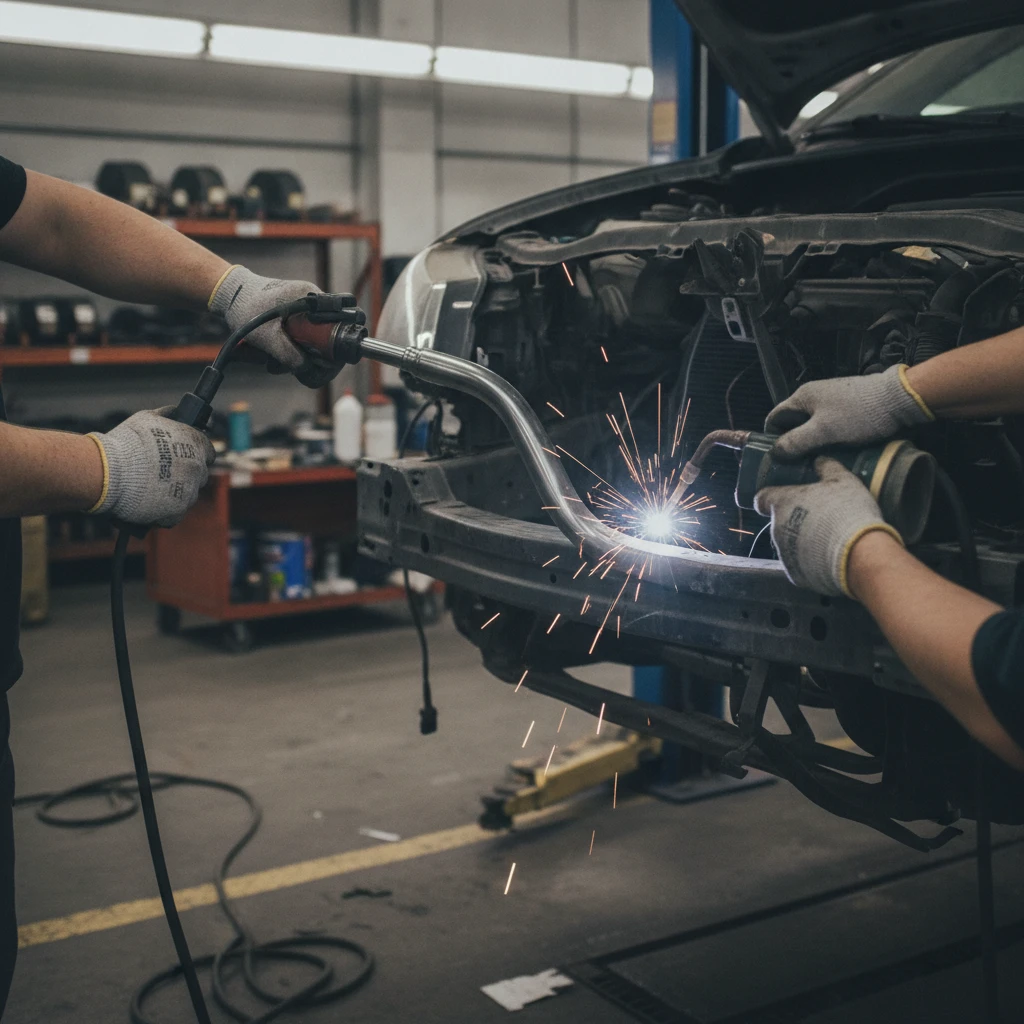
If the highway collision was severe, the vehicle’s internal frame or unibody structure might be compromised. Using specialized structural measuring systems, collision technicians pull and align the frame back to its factory specifications. Once the structural integrity is properly restored, the focus shifts to repairing or replacing outer panels, such as doors, aluminum hoods, fenders, and quarter panels.
3. Paint and Refinishing
After the physical bodywork is completed, the vehicle moves to the paint department. Matching the original paint color requires precision, especially in a city like Houston where intense, year-round sun exposure can subtly alter a car’s original factory finish over time. Achieving a seamless, undetectable blend is both an art and a science that requires advanced color-matching technology and skilled painters. Learn more about the intricacies of this process in our article on how color matching works for an invisible paint repair.
4. Reassembly and Final Quality Checks
In the final stage of the collision repair process, all newly painted parts, exterior trims, moldings, and restored panels are meticulously reattached to the vehicle. The exterior is cleaned, and the shop performs a thorough quality control inspection to ensure all collision repair standards have been met before handing the keys back to the owner.
Choosing the Right Collision Repair Facility for Your Needs
After an accident, you will face the decision of where to take your vehicle for restoration. While your insurance company might suggest a specific direct repair network shop, Texas law dictates that you have the legal right to choose your own repair facility. You might consider returning to your original auto dealership, but independent collision centers often provide a highly specialized focus strictly on exterior bodywork and paint.
To weigh your options effectively, you can review this dealership vs independent auto body shop comparison. Selecting a reputable houston car accident body shop is critical for ensuring your vehicle’s structural integrity and aesthetic appearance are correctly prioritized. Look for facilities that prioritize transparent communication, detailed damage estimates, and thorough post-repair quality inspections.
Frequently Asked Questions About Houston Collision Repair
Do I have to use the body shop my insurance company recommends?
No. Under Texas law, you have the absolute right to choose whichever houston car accident body shop you prefer. Your insurance company may suggest a Direct Repair Program (DRP) shop to streamline their own processes, but the final decision of who works on your vehicle is entirely up to you as the vehicle owner.
How long will my collision repairs take?
The timeline for auto body repair varies significantly based on the severity of the collision damage, parts availability, and the speed at which your insurance company approves estimates and supplements. Minor bumper covers or cosmetic door repairs might take a few days, while extensive structural pulling and multi-panel replacements could take several weeks. A reputable collision center will keep you updated throughout the process.
Does collision repair include fixing my engine or replacing my brakes?
No. Collision repair facilities specialize exclusively in exterior body panels, unibody framework, automotive paint, and structural components. If your accident resulted in mechanical damage to the engine, suspension, or transmission, or if you need brake work, tire replacements, routine oil changes, or windshield glass replacement, these specific services are excluded from standard bodywork. You will need to seek out a specialized mechanic, tire shop, or auto glass technician for those specific issues.
Will my car ever look the same after a major collision?
When properly repaired by trained collision professionals utilizing modern alignment equipment, structural measurement technology, and advanced paint-matching systems, your vehicle can absolutely be restored to its pre-accident aesthetic condition and factory structural specifications.
Conclusion and Next Steps for Houston Drivers
Driving in Houston requires constant vigilance, especially when navigating the city’s highest-risk intersections, busy tollways, and major highway interchanges. While practicing defensive driving is your best tool for preventing accidents, collisions still happen to the most careful drivers. Being prepared with a solid understanding of post-accident protocols and the full auto body repair process can significantly reduce your stress following a crash. Whether you are dealing with a minor fender bender in heavy stop-and-go traffic on I-45 or more substantial exterior body damage from a collision on Loop 610, professional auto body restoration is essential for getting your vehicle looking its best again.
If you have recently been in an accident and are searching for a trusted houston car accident body shop to handle your exterior collision repairs, we are here to help. Our team is dedicated to guiding you through the initial estimate, insurance documentation, and auto body repair processes to ensure your vehicle’s exterior panels and structural frame are properly restored. Contact us today at (832) 400-5423 to speak with our team and schedule your initial collision damage assessment.