Car paint color matching works by combining your vehicle’s factory paint code with advanced digital spectrophotometer readings to capture the exact hue of your car’s current finish. Because sunlight and age alter original colors, technicians create custom spray-out test cards and blend the new paint into adjacent panels, ensuring an invisible, seamless repair after an accident.
The Art and Science of Car Paint Color Matching
When you pick your vehicle up from an auto body shop after a collision, the repaired area should be completely indistinguishable from the rest of the car. Achieving this invisible repair is one of the most highly technical aspects of modern collision repair. It requires a deep understanding of paint chemistry, light reflection, and advanced application techniques.
Modern vehicles rarely feature a simple, single-layer coat of paint. Today’s automotive finishes are complex, multi-stage systems. They typically consist of a primer layer, a base coat that provides the actual color, and a durable clear coat that protects the paint and provides a glossy finish. Many modern vehicles also utilize tri-coat finishes, which introduce an additional mid-coat of translucent pearl or metallic flakes to give the paint depth and sparkle. Replicating these layers so they seamlessly interact with the light in the exact same way as the original factory finish requires much more than simply looking up a color code in a database.
The Step-by-Step Paint Matching Process
Professional auto body repair facilities follow a strict, standardized process to ensure accurate car paint color matching on every vehicle. Here is how the process works from start to finish:
- Locating the OEM Paint Code: The process begins by finding the Original Equipment Manufacturer (OEM) paint code, which is usually located on a placard inside the driver’s side door jamb, under the hood, or in the trunk. This alphanumeric code tells the painter the original color formula used at the factory.
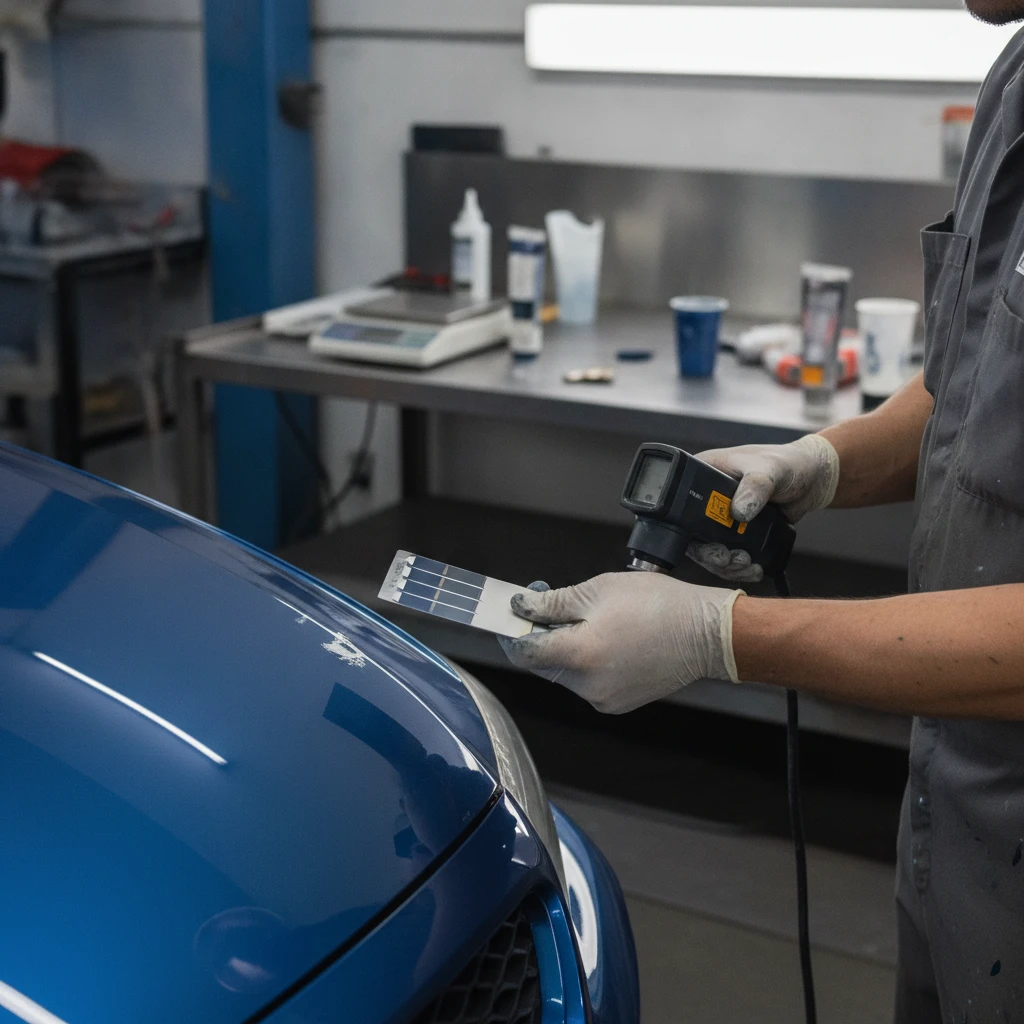
- Digital Color Analysis (Spectrophotometer): Because a car’s paint ages and changes over time, the factory code is only a starting point. Technicians use a highly specialized multi-angle camera called a spectrophotometer. This device is placed directly onto a clean section of the adjacent original paint. It bounces light off the surface at multiple angles to read the exact current shade, metallic flake size, and pearl orientation.
- Database Cross-Referencing: The spectrophotometer reading is downloaded into a computer system equipped with the paint manufacturer’s vast database. The software compares the camera’s reading to thousands of known formulas and suggests a custom-tinted mix that accounts for the specific aging and weathering of your vehicle.
- Mixing and Tinting: Using a computerized mixing bank, the technician carefully combines various toners, metallics, and pearls down to the tenth of a gram. Even a single drop of incorrect toner can throw off the entire match.
- Creating Spray-Out Cards: Before any paint touches your vehicle, the technician applies the mixed paint and clear coat to a metal “spray-out card.” This card is then held up against the vehicle under various lighting conditions—including natural sunlight and specialized color-corrective shop lights—to ensure the color, lightness, and metallic flop are a perfect match.
Why Your Factory Paint Code Is Rarely Enough
Many drivers assume that ordering a replacement bumper pre-painted with their factory paint code will result in a perfect match. In reality, this almost never works. Several factors make the exact factory formula inaccurate for a vehicle that has been driven for any length of time.
The most significant factor for local drivers is the environment. If you want to understand why your paint changes, you have to look at how Houston’s intense sun and weather affect your car’s paint. Constant exposure to extreme ultraviolet (UV) radiation causes the pigments in automotive paint to gradually break down and lighten. A vehicle parked outside for three years will have a noticeably different shade of blue or red than it did the day it rolled off the assembly line.
Furthermore, automotive manufacturers paint cars in large batches across multiple different assembly plants. Two cars with the exact same paint code, built in the exact same year, can have slightly different hues depending on the temperature, humidity, and precise mix of the paint batch on the day they were manufactured. The factory paint code gets you to the right neighborhood, but custom tinting and matching are required to find the exact house.
The Critical Role of Paint Blending
Even with advanced cameras and expert tinting, achieving a 100% perfect “butt match” (where newly painted panels sit directly next to original panels with a hard break between them) is incredibly difficult, especially with metallic and pearl paints. To achieve a truly invisible repair, auto body shops use a technique called blending.
Blending involves applying the new base coat color directly over the repaired area, and then gradually tapering that color out into the undamaged adjacent panels. For example, if a front fender is replaced and painted, the technician will lightly spray the new color into the front door and the hood, fading it out so that there is no distinct line where the new paint ends and the old paint begins. Finally, the entire fender, door, and hood are sprayed with a fresh layer of clear coat to seal the repair and provide a uniform gloss.
Because blending is an essential step recognized by vehicle manufacturers, insurance companies standardly cover the cost of blending adjacent panels. If an initial estimate omits this step, your auto body shop will submit documentation explaining why your repair might need a supplement on the insurance estimate to ensure the paint match is handled properly according to industry standards.
Variables That Affect Car Paint Color Matching
Matching paint is a delicate science influenced by numerous physical and chemical variables. Below is a breakdown of the most common factors that complicate the car paint color matching process.
| Variable | Description | Impact on Paint Matching |
|---|---|---|
| Substrate Material | The material underneath the paint (e.g., plastic bumpers vs. metal fenders). | Paint dries and cures differently on plastic than it does on metal, often resulting in a slight natural color variation even from the factory. |
| Metallic Flake Orientation | The tiny pieces of metal mixed into the paint that give it sparkle. | If the technician sprays the paint at a different pressure or distance than the factory robots, the flakes will lay differently, altering how light reflects off the panel. |
| Metamerism | A phenomenon where two colors appear to match under one light source but look completely different under another. | A repair might look perfectly matched under the fluorescent lights of the shop but appear visibly mismatched outside in natural sunlight. |
| Clear Coat Thickness | The depth of the transparent protective layer applied over the base color. | A thicker or thinner clear coat can change the perceived depth and darkness of the underlying base coat color. |
Plastic vs. Metal: Why Bumpers Often Look Different
A common observation after an auto body repair is that the front or rear bumper cover looks slightly different in shade compared to the adjacent metal quarter panels or fenders. It is important to note that this variation frequently exists on brand-new cars sitting on the dealership lot.
Bumpers are made of flexible plastic and urethane, while fenders and hoods are made of steel or aluminum. Plastic holds a different static electrical charge than metal. When metallic paint is sprayed onto a plastic bumper, the static charge pulls the metallic flakes in different directions than it does on a metal panel. Additionally, because bumpers are flexible, the paint mixed for them often requires special flex-additive chemicals that can slightly alter the final hue. While professional painters work meticulously to minimize this visual difference, slight variations between plastic and metal surfaces are a normal characteristic of automotive refinishing.
Post-Paint Quality Assurance
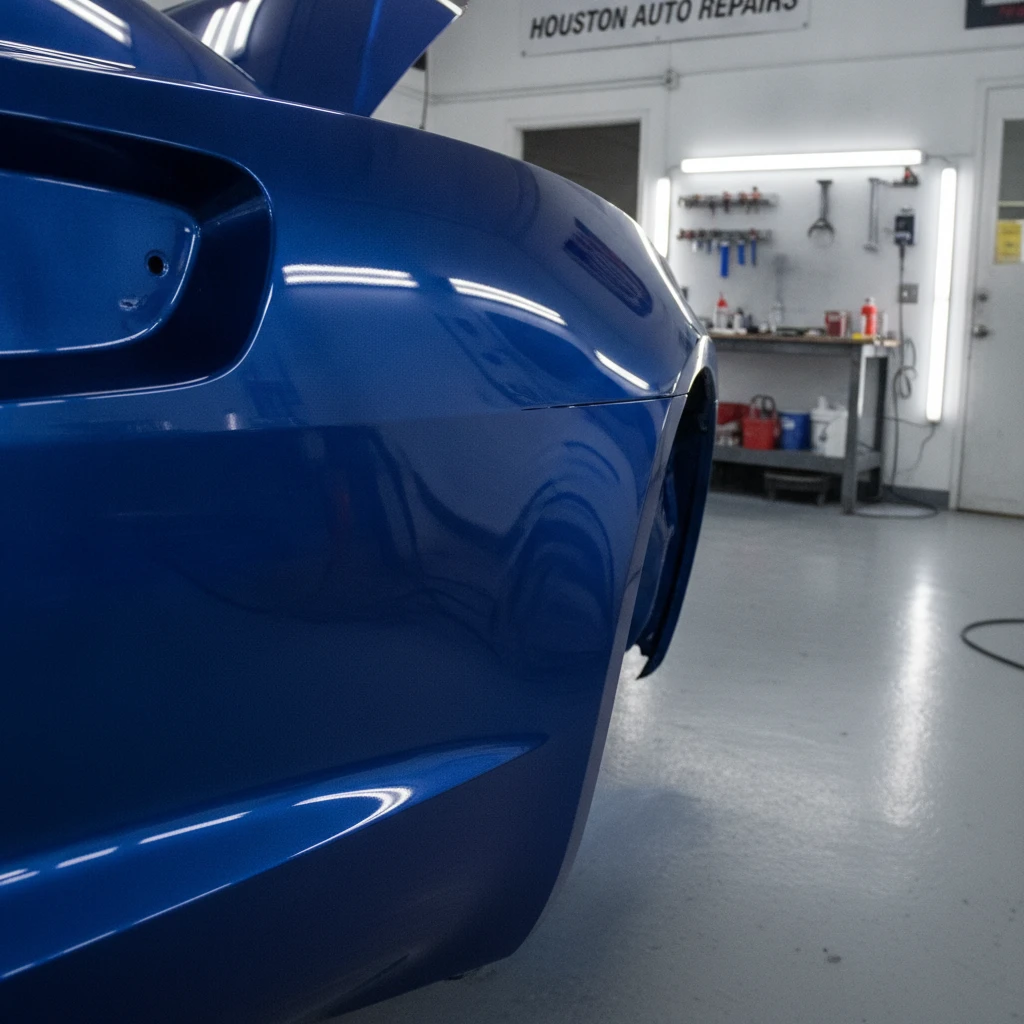
Once the vehicle leaves the specialized downdraft paint booth, the color matching process is still not complete. The vehicle must undergo rigorous inspections and finishing processes. The fresh clear coat is carefully wet-sanded and polished to ensure the surface texture—often referred to as “orange peel”—perfectly mirrors the texture of the factory paint on the rest of the car.
Refinish technicians will evaluate the vehicle in natural daylight to confirm the blend is invisible and that no metamerism is occurring. This intense scrutiny is a vital component of a proper quality assurance collision repair checklist, ensuring the vehicle is fully restored to its pre-accident condition before the customer is ever notified for pickup.
For more information on standard consumer protections and standard repair practices, drivers can also review resources provided by the Texas Department of Insurance (TDI), which oversees how auto policies function regarding comprehensive and collision claims in the state.
Frequently Asked Questions About Paint Repair
Do you have to paint the entire car to fix a scratch?
No, you do not need to paint the entire car for a scratch or a single panel repair. By using the computerized color matching and panel blending techniques described above, technicians can isolate the repair to the damaged area and its immediately adjacent panels, leaving the rest of your original factory paint intact.
Will aftermarket replacement parts look different after being painted?
The type of replacement part used can influence the preparation process. OEM (Original Equipment Manufacturer) parts typically arrive with a standard factory e-coat primer that is consistent and easy to prepare. Aftermarket parts may arrive with different primer coatings that require extra sanding, sealing, and preparation to ensure the final color coat adheres properly and looks correct. This is one of many factors to consider when choosing between OEM and aftermarket parts for your collision repair.
Can you match custom or non-factory paint jobs?
Matching a custom paint job is more challenging than matching a factory finish because there is no initial OEM paint code to reference. However, skilled technicians can still use a spectrophotometer to read the custom color, create test panels, and manually tint the formula until a match is achieved. It is a highly manual, time-consuming process that relies heavily on the painter’s experience and trained eye.
Why does my car’s paint look hazy after a repair?
If a freshly painted panel looks hazy or lacks depth, it is typically an issue with the clear coat application or the final polishing stage, not the color match itself. Proper wet sanding and high-speed buffing are required to bring out the high-gloss clarity that matches the factory finish.
Conclusion: Trust the Paint and Collision Experts
Car paint color matching is an intricate combination of high-tech digital analysis, exact chemical mixing, and skilled human artistry. From battling the fading effects of harsh weather to understanding how metallic flakes sit on plastic versus metal, achieving an invisible repair requires dedicated auto body professionals who refuse to cut corners. If your vehicle has been damaged in an accident and you want to ensure it looks exactly like it did before the collision, our team is ready to help restore your car’s flawless finish. For expert collision repair and seamless paint matching, contact us today at (832) 400-5423 to schedule your estimate.