Car frame straightening repair uses computerized laser measuring systems and hydraulic pulling machines to restore a vehicle’s structural framework back to its exact factory specifications after a collision. When a frame or unibody structure bends to absorb impact, specialized auto body technicians apply thousands of pounds of precise force to carefully pull the metal back into alignment without compromising its structural integrity.
Understanding the Foundation of Your Vehicle
In modern automotive manufacturing, the framework is the critical core that supports the entire vehicle. To understand how frame damage occurs and why it requires specialized attention, it is helpful to know the two primary types of vehicle construction on Houston roads today:
- Unibody Construction: The vast majority of modern sedans, crossovers, and smaller SUVs are built using a unibody design. In this structural model, the vehicle’s frame and body panels are integrated into a single, continuous unit. Unibody frames are engineered with specific “crumple zones” designed to crush and fold upon impact, effectively absorbing the kinetic energy of a crash and directing it away from the passenger cabin.
- Body-on-Frame Construction: Common in heavy-duty trucks and large SUVs, this traditional design features a solid steel ladder frame, onto which the passenger cabin and cargo bed are separately bolted. Because these frames are rigid, they behave differently during collisions and require heavy-duty pulling equipment to realign.
Common Signs Your Vehicle Needs Car Frame Straightening Repair
Whether you were involved in a major multi-car pileup or a seemingly minor low-speed collision, structural shifts can happen. If you frequently navigate congested local routes, you might recognize some of the high-risk areas detailed in this Houston highway collision heatmap, where abrupt stops and rear-end collisions often lead to underlying structural damage. Here are the most common signs that your car has suffered frame damage:
- Misaligned Doors, Hoods, or Trunks: If your car doors require excessive force to close, or if the panel gaps around your hood and trunk are uneven, the underlying structure has likely shifted.
- Creases in the Roof or Floor Pan: When a vehicle takes a heavy impact at the front or rear, the energy travels through the unibody. This can cause the roof or floorboards to buckle, leaving visible ripples or creases in the metal far from the actual point of impact.
- Uneven Shock and Suspension Wear: If the chassis is no longer perfectly square, the vehicle’s weight will distribute unevenly. You may notice your vehicle leans to one side, or that suspension components wear out highly irregularly.
- Tracking Issues (Crab Walking): If a vehicle appears to be driving slightly sideways or “dog tracking” down the road, the rear wheels are no longer trailing properly behind the front wheels due to a bent frame.
The Car Frame Straightening Repair Process Explained
Properly realigning a vehicle structure is a meticulous process that combines advanced technology with heavy industrial force. Generalist repair strategies simply do not work for this level of structural restoration. Because auto body and collision work is highly specialized, our facility focuses solely on exterior and structural collision damage; we explicitly exclude mechanic, engine, transmission, oil change, brake, tire, and auto glass replacement services to ensure our entire focus remains squarely on auto body restoration.
1. Initial Inspection and Computerized Laser Measurement
Before any pulling begins, the vehicle is driven or towed onto a specialized frame rack. Technicians use advanced computerized laser measuring systems to map the entire underside of the car. These scanners read microscopic targets hung from the vehicle’s chassis and compare those data points against a database of factory specifications. This mapping identifies exactly where the frame is bent and by how many millimeters.
2. Securing and Anchoring the Vehicle
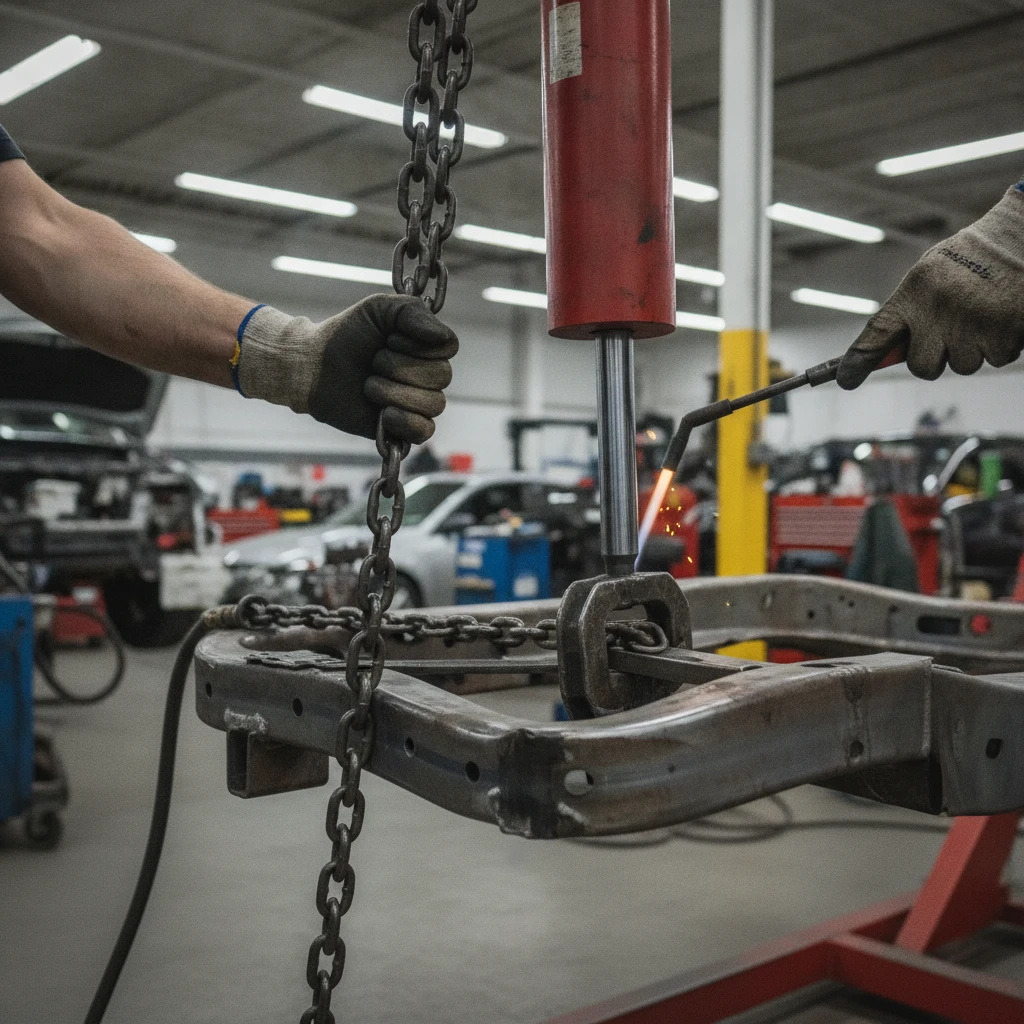
To successfully pull a frame back into shape, the vehicle must be completely immobilized. Heavy-duty steel clamps and heavy chains are attached to the vehicle’s pinch welds (the reinforced structural edges underneath the car). This anchoring process ensures that the car remains completely stationary while immense pulling pressure is applied.
3. Hydraulic Pulling
Once anchored, technicians use specialized hydraulic towers attached to the frame rack. These towers are connected to the damaged sections of the vehicle via heavy chains. The technician carefully controls the hydraulic rams to apply thousands of pounds of pressure in precise directions. The metal is pulled slowly—often in multiple directions simultaneously—to relieve structural stress and ease the metal back to its original position without tearing or weakening it.
4. Post-Pulling Verification
During and after the pulling process, the laser measurement system continually actively monitors the chassis. The pulling continues until every critical mounting point matches the manufacturer’s exact specifications. A thorough quality assurance collision repair checklist is executed to ensure the frame is perfectly restored before the vehicle moves to the exterior panel replacement and refinishing phases.
Common Types of Frame Damage
Collision forces manipulate metal in unpredictable ways. Auto body professionals categorize structural damage into a few primary types based on how the kinetic energy deformed the chassis.
| Type of Frame Damage | Description of Structural Shift | Common Collision Scenario |
|---|---|---|
| Mash Damage | The vehicle’s frame collapses in on itself, effectively making the frame shorter than its original factory length. | Direct head-on collisions or severe rear-end impacts where the vehicle crumple zones compress tightly. |
| Sway Damage | The front or rear section of the vehicle is bent to the left or the right, causing the vehicle to lose its rectangular shape. | Side-impact or “T-bone” collisions, often occurring at busy intersections. |
| Sag Damage | Specific areas of the frame are bent downward, creating a structural dip and causing the surrounding body panels to pinch together. | Collisions involving high-clearance vehicles driving up over the bumper of lower sedans, or severe undercarriage impacts. |
| Twist Damage | The entire chassis is torqued, causing one corner of the vehicle to sit higher or lower than the opposite corner. | High-speed rollover accidents or severe angular impacts that torsion the vehicle’s center of gravity. |
Insurance Estimates and Hidden Structural Damage
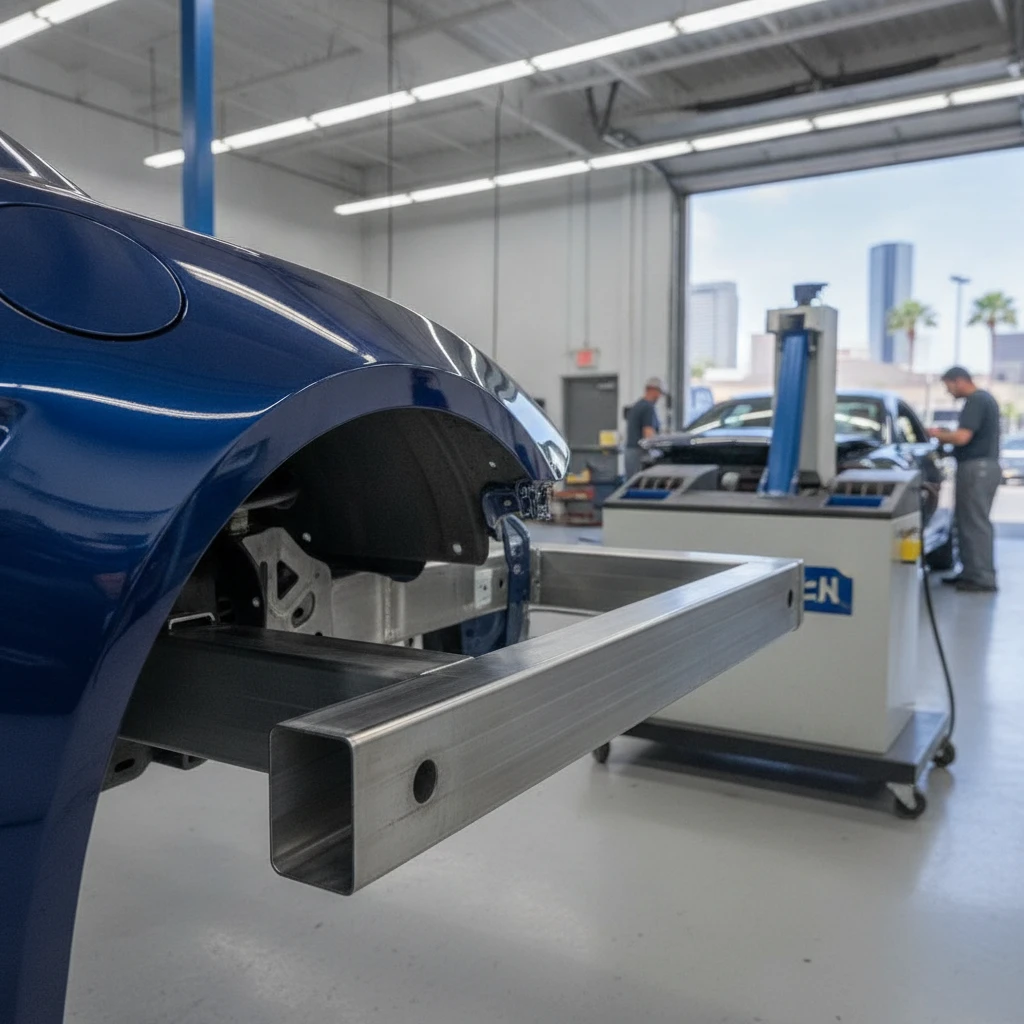
Following an accident, a preliminary visual inspection often fails to reveal the true extent of structural damage. Adjusters may write an initial estimate based solely on cracked bumpers and dented fenders. However, once the vehicle arrives at the collision center and the exterior panels are removed (a process called teardown), the hidden frame damage is frequently exposed.
When this occurs, the auto body shop must submit additional documentation to the insurance company to cover the required frame straightening. If you are navigating this process, it helps to understand what is a supplement on an insurance estimate, as it is a completely standard procedure necessary to ensure your vehicle is repaired correctly.
Furthermore, the cost and complexity of the frame repair can vary dramatically depending on the size and weight of the vehicles involved in the crash. Understanding the dynamics outlined in this truck vs sedan collision repair cost breakdown can provide insight into why structural repairs for a massive pickup truck require vastly different equipment and labor hours compared to a compact unibody sedan.
Frequently Asked Questions (FAQ)
Is a vehicle automatically totaled if it has frame damage?
No, a vehicle is not automatically deemed a total loss just because it requires car frame straightening repair. Whether an insurance company totals a car depends entirely on the math: if the total cost of the repairs (including structural straightening, bodywork, and paint) exceeds a certain percentage of the vehicle’s actual cash value, it will be totaled. Minor to moderate frame pulls are regularly approved and successfully completed.
How long does the frame straightening process take?
The time required varies based on the severity of the collision, the specific type of frame damage (mash, sway, twist, or sag), and how quickly the insurance company approves the structural supplement. The pulling process itself can take a few days of precise setup, measurement, and pulling, but it is just one phase of the overall collision repair timeline.
Is a repaired frame as safe as it was before the accident?
Yes, provided it is repaired by competent professionals using computerized measuring systems. Modern auto body techniques are designed to restore the metal to its precise factory specifications, thereby restoring the vehicle’s structural integrity and its ability to protect occupants in a future collision. Guidelines set by organizations like the National Highway Traffic Safety Administration (NHTSA) underscore the importance of maintaining original structural designs for passenger safety.
Do I have the right to choose who fixes my car’s frame?
Absolutely. According to guidelines maintained by the Texas Department of Insurance (TDI), consumers have the legal right to choose the auto body shop that repairs their vehicle. You are not required to use the shop recommended by your insurance adjuster if you prefer a different independent collision center for your structural repairs.
Trust the Professionals with Your Structural Repairs
Car frame straightening repair is the most vital step in the post-accident recovery process. Without a perfectly square and measured foundation, subsequent auto body repairs will not align correctly, and the vehicle’s overall safety remains compromised. If your vehicle has been involved in a collision and you suspect structural damage, immediate professional evaluation is critical to getting safely back on Houston roads. For reliable auto body and collision repair guidance, reach out to our team at (832) 400-5423 today.